Rome, Italy: Where Did the Tans Disappear To? – by Barb

Sorry, it’s been quite some time since we’ve updated our blog. And I don’t really have a good excuse……except that, well, we’re not in Africa any more! And I know for many of you, you’re thinking, “Isn’t that all the more reason for you to be updating your blog more frequently?  – Better internet. Easier access to things.” You’d be right about the Internet. We were blown away with how fast our connection was, after spending a couple of months in Africa! And yes, access to everything is easier. Public transit works smoothly and efficiently, it’s spring here so we’re not dripping with sweat whenever we walk somewhere, and there are loads of stores, restaurants, museums, art galleries, historical sights, beautiful views…….And that you see, is the problem! There is just SO MUCH to see and do! And so much to learn!

As I’ve mentioned several times on this page, I really looked upon our year traveling the world as a learning opportunity for our boys (and us). Yes, there would be lots of adventure thrown in, as there always is when you travel (sometimes when you least expect it!) and hence the name of our blog: Tan Ed-venture (an educational adventure). And we have learned tons, and tons. But while we were in Africa, the learning seemed to come in manageable chunks. We spent a week volunteering at a small local school – a great experience that we will never forget. During our time there we learned a lot about the local people and their culture. We also stayed with the Maasai people, outside of the Maasai Mara Park and experienced yet another culture which is incredibly different from our own. We spent 5 days on safari in Tanzania learning about the local flora and fauna. At the end of each of these multi-day experiences we would have a “down day” or two where we could reflect on the experience and write about it.

It takes quite a while for us to complete a series of blogs. It’s a family affair: Clay usually sorts the photos for us (and Caleb adds in those he’s taken); we assign who will write about what; rough drafts are completed and shared and then edited; finally, I add the edited drafts to the blog page and insert the photos.

Once we’d arrived in Europe (Italy, to be more precise), the number of things we wanted to see and do – and the number of things accessible to us, increased substantially. Here we were in Rome, in an apartment with a flush toilet, and heat! We had a fridge and something to cook on (other than a hot plate). The shower had hot water that was hot within seconds, AND stayed hot for more than a minute! And to top it all off, we could walk to the train station, the Colosseum, numerous pizza places, countless museums and historical sights. There was even a two-storey bookstore at the train station, with a section of English books. (For those of you who know me, you know I cannot resist a bookstore!)

My teacher mode kicked into high gear. We got a book about the Colosseum and read it together. We watched two very interesting documentaries: one explaining the intricate system of trap doors and elevators used to move the animals from the basement into the arena of the Colosseum, and another explaining the kinds of battles that were believed to have been staged there. But once we’d learned a bit more about the Colosseum we needed to know more about the people of Ancient Rome. And once we’d starting learning more about the people, we needed to know about events occurring at that time. Once we learned that……well, you get the idea! So much to learn! So many places to see! (And this was only our first day here!)

Spending time in Europe has made history come to life. I was never really interested in history in school. It all seemed so removed from day to day life. But when you’re standing in the actual place where the events happened, it suddenly becomes much more relevant. So, we’ve been rather remiss on updating the blog, but it’s certainly not because we don’t have lots to share! So, I’ve decided to stop looking for things to visit and learn about for a couple of days while we put some of it on “paper” for you. Hope you enjoy!

DSCF2480

Arusha, Tanzania: From Rustic to Royal! – by Barb

In order to afford experiences such as a safari, we must cut back as much as possible in the other areas of our budget. Everyone has their priorities when traveling and I think it is good to discuss these ahead of time and be completely clear about them. I know some people who would put ‘food’ at the top of their priority list. It is the experience of trying different foods and restaurants that they enjoy most and they would not want to skimp in this area. For me, at the top of the list is the ‘experiences’. I want to be able to do things like take the boys on safari, go for a trek in Nepal, and visit the Great Barrier Reef. In order to do these things our food budget and accommodation budget are pretty meager. I look for places to stay that are safe for a family (in a good area), are clean, and have wifi – but as inexpensive as possible within those criteria. We cook when we can and if we eat out, we look for budget meals.

squat-toilet-middle-east

I was quite pleased with our accommodation in Tanzania. For a few days we stayed at a local family’s home; the boys had one room and Clay and I had another. The bathroom was basic – a squatter toilet and we had to heat water on the stove and use a cup to pour it over us for a shower; but it was clean, safe, and yes, there was even wifi!

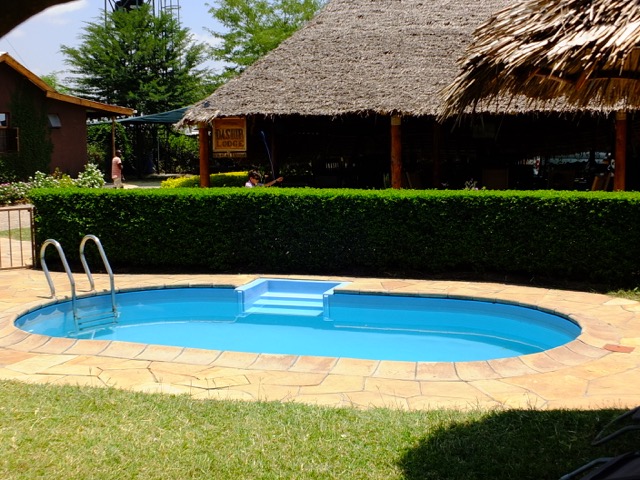
Then we moved to a small “cottage” which overlooked a small pool. The pool didn’t look swim-able but the cottage was more than adequate. The floor was just cement and one wall of the cottage was mosquito netting but it was quite comfy. We even had a flush toilet and a shower – although the water from the toilet ran all over the cement floor. We had a little hot plate to do our cooking on and a bar fridge to hold necessary items.

pool

While all of the places we have stayed have been adequate, I would describe them as quite rustic. So, I’m sure you will not be surprised to hear, we were all very excited about the one place we had booked in Tanzania that we knew would be in a whole different class! We had heard about Dashir Lodge from a friend of ours. Her brother-in-law and his wife are the owners, originally from Canada, but they “sold everything but [their] kids and moved to Africa”. (see their website: www.dashirlodgeandsafaris.com)

I was equally as excited to meet some fellow Canadians, as I was to stay in a luxurious lodge for a couple of nights. I knew Darryl and Shirley must have an interesting story and I was hoping we’d get a chance to chat with them.

As we drove down the laneway leading to Dashir, you could sense the excitement in the car. “Really, we’re going to get to stay here?!” Caleb exclaimed!


And Darryl and Shirley didn’t disappoint. We were greeted with warm hugs, as though we’d just reconnected with long lost friends. Our luggage was quickly swept away (quite a novelty for us, as we are used to lugging it everywhere on our own!) and we were able to sit down and relax. Darryl and Shirley had thought of everything – they even asked if there were any foods we were missing since we had been traveling for so long and had searched high and low to find them for us. They gave the boys their own “tent”, which made them feel very grown up and allowed Clay and I to have our own space. The place was absolutely beautiful and no expense was spared in making it comfortable for guests. The bed was heavenly and I could have spent an hour just enjoying the spacious, hot shower!

The boys’ tent

DSCF4432

Our room!

But the very best part was chatting with Darryl and Shirley. Shirley talks a mile a minute and you have to listen closely to keep up, but she is absolutely hilarious and within minutes we felt as though we’d known her for years. Darryl, who is the quieter introvert, was full of wisdom and added an element of calm, juxtaposing Shirley’s emotion-filled anecdotes.

What a heavenly couple of days we had. The food was incredible – the boys even raved about the salads! Clay and Darryl were able to pull out their guitars and jam a couple of times – once around the campfire, until the ants got too much to bear! And Connor spent hours in the crystal clear swimming pool.

 DSCF4447

DSCF4444

Our second day we went for a walk into the local village where we saw the primary school, secondary school, the “pharmacy”, a small shop, and several locals harvesting some of their crops for market.

DSCF2310

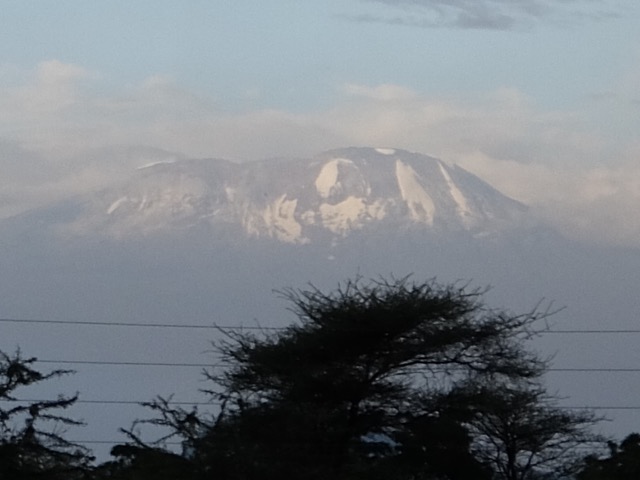
The incredible view of Kilimanjaro from Dashir.

Darryl and Shirley also arranged a hike on Mt. Kilimanjaro for us. We began at the Machame Cultural Centre then hiked to a cave that had been used in the past by the local Chagga people to hide from the Maasai. We continued on to a waterfall, where we stopped for a picnic lunch. After that we headed back to the cultural centre. Unfortunately, it was a cloudy day so we couldn’t see the mountain above us but it was great to be able to do a short hike.

So, if you’re heading to Tanzania and would like a wonderful place to stay, we would highly recommend Dashir Lodge. They will also organize safaris for you (just check out their website) and you will not be sleeping on the ground, or eating with the rats! Thank you Darryl and Shirley for a wonderful time. While we were only at Dashir for two short nights, we hope to have new friends for a lifetime!


4 National Parks, Tanzania: 5 Tips I Learned from our Safari – by Barb

So much of what you read about safaris in Africa, makes them sound glamorous and exciting. While we really enjoyed our five days on safari, there is a lot more to it than just the nail-biting moments when you spot a lion only a few feet in the distance. These tips may help to inform you of some of the other components.

  1. Say goodbye to your budget, if you want to go on safari. Safaris are not cheap, period. The reason why, is not because the tour operators charge exorbitant prices. In fact, we went with a small, private tour operator and the owner charged us next to nothing for his fees. I felt badly with how little we were paying him (about $10/day). What hikes up the cost is the fees that go to the government. Yep, the government is raking in millions of dollars from the National Parks. The fee to enter the Serengeti, for example, is $60/adult/day (and Caleb counted as an adult!). The other parks were $50/person/day to enter. In addition to the park entrance fee, there is a transit fee to pass through the Ngorongoro Crater, as well as a Crater Service Fee/vehicle. So our fees, just to enter the parks, totalled over $1300 for the five days. If you plan to stay overnight somewhere, the lodges run about $500/pp/night. Wayyyy out of our budget. But even camping is not cheap. You pay about $30/adult/night. So, be prepared for the expense. We decided that despite the cost, it was something we just had to do while we were in Africa, and I’m glad we did.

DSCF2195

  1. Make an appointment with your chiropractor, for when you return. The roads in and around the parks are bumpy dirt paths. Some sections are kind of like washboards, and the drivers claim, if they drive faster, it helps to reduce the bumpiness. Well, I think we sometimes hit 100 km/hr on some of these dirt/gravel paths. I was holding on for dear life! Even when we weren’t soaring across the savannah at breakneck speeds, the bumpiness of the roads can really do some damage to those with poor backs!
  1. If you want continuous excitement, watch the National Geographic channel. After re-mortgaging your home to go on safari, you will probably be tempted to wake up at dawn to catch the animals early, and stay out on the savannah until the sun has set for the day. Let me remind you, however, that during that entire 12 hours or so, you are sitting/standing in a hot, dusty, vehicle often looking at bush. Yep, we saw incredible animals, including a cheetah that had just chased down a young wildebeest. Our guide reminded us of just how lucky we were to see that. A lot of the time you are driving around and around, and around just looking for the next animal, or hoping for that exciting chase that you’ve seen on the TV documentaries. The lions, leopards, and cheetahs spend most of the their time sleeping; so the chances of actually catching them on the hunt are pretty miniscule – not impossible – but that’s why you spend so much time driving, waiting, and watching. You just never know when or where that moment will come and often you have to settle with spotting the animals from a distance, sleeping in a tree. By the third day, Connor was starting to find this waiting and searching a little bit tiresome so I turned it into a game for him. He became our “safari spotter” and would let us know when he saw something in the distance. Then we would pull up and check it out. I also brought along a book that we were reading together and when we were sitting and waiting in one spot for quite a while, he and I would pull out the book and read a section. This kept his spirits up and in the end he really enjoyed the whole experience.


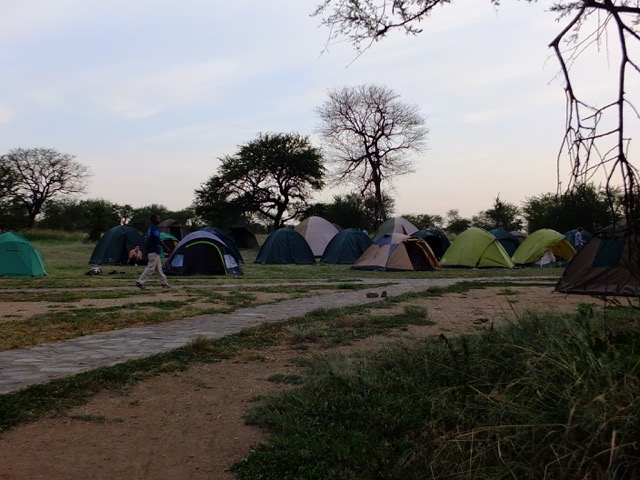
  1. If you’re doing the more “economical” camping safari, be prepared for cold showers and a few rats. Although the Tanzanian government rakes in lots of money from park entrance fees, it does not mean that money is used to build or maintain wonderful park facilities. When you camp in the parks, you set up your tent in a field. There are usually washrooms, and our guide made sure to find campgrounds where there was water (several of them run out). This proved to be incredibly valuable, since as you’ll read in tip #5, we all needed a hose-down after bouncing along the dirt roads for several hours. We did find one camping area where the water was luke-cool – I think the black water tank helped to heat it up a little during the day – but usually you had a dribble of cold water and, if you were lucky, a flush toilet. But hey – you’re camping, so it’s all good! What I wasn’t keen on, were the rats. I’m OK with spiders, snakes, and a variety of other creatures, and I don’t even mind rats, if you’re seeing them running in a field in front of you. What I don’t like are rats under your feet while you’re eating dinner! One of our camping areas had loads of rats running through the dining building. They were scurrying along the rafters, down the walls, and across any table, if the visitors left for even a moment. Yuck! The boys, who are both terrified of spiders, didn’t seem to mind our little furry friends at all and they appeared quite amused that I found them most disgusting!

DSCF3635DSCF3632

  1. Wearing your fair share of dust and dirt is all part of the fun. It will come as no surprise to you that it gets hot in Tanzania. Not unbearable, but hot. When we would start out in the morning I would have lots of energy and found the air quite refreshing. Connor and I would stand in the back seat of our safari jeep and enjoy the breeze as we jostled along the paths. By midday, however, my energy would start to wane as the hot sun shone into our vehicle. The top, of course, was open to let in any breeze you could catch, and we could open the windows, but between noon and 3pm it got just plain hot. The dirt paths that we drove across also got hot, which meant that even though it was not the dry season when we were there, they were plenty dry and dusty. We could sometimes go an hour or more without passing another vehicle, but there were other times when we would pass several – and the more vehicles there were, the more the dust got stirred up. By the end of each day our faces were caked with dust. You could actually run a finger down your face and see the line you left! Showering was not optional!

DSCF3562

So, after reading my top tips, you might wonder, “If I had it to do over again, would I do anything differently?” Firstly, let me just restate that I am really glad we went on the safari. Caleb, especially, loved it. He had learned a lot about the animals ahead of time and was keen to spot them, even if it took some time. And our guide did a great job of ensuring we got to see all the big animals. That’s why he wanted us to go to the four different parks. Originally I had thought that we would do 2 or 3 days, and I think if I were to do it over again, that is what I would do. In some ways, I really liked the five days, because by the end you felt you got a good sense of the vastness of the landscape and the challenge of finding the animals in it. On the other hand, we could have seen most of the animals in 2 or 3 days and saved a fair chunk of money. But all in all it was an incredible experience and one I’m sure none of us will ever forget.

Nakuru, Kenya: Soar Kenya Academy, IV & Hopewell Academy – by Clay

After a treacherous matatu ride from Narok, we pulled into Nakuru more or less in one piece. I say treacherous because a matatu is a van designed to carry 14 passengers and at one point there were 20 of us crammed in there plus an old 19” CRT television, 3 large sacs of what appeared to be potatoes, and a goat. And that wasn’t even counting the driver or the conductor who hung off the side of the van encouraging more people to sardine their way inside. Matatu03

We were met in town by Joab, the manager of the International Village (a small camp for visitors), and he took us to the countryside where we would be staying. The IV was pretty much adjacent to the Nakuru National Park so these were our neighbours:

We didn’t really see the need to pay the US$80/person to go inside since the view from the side of the road was pretty good.

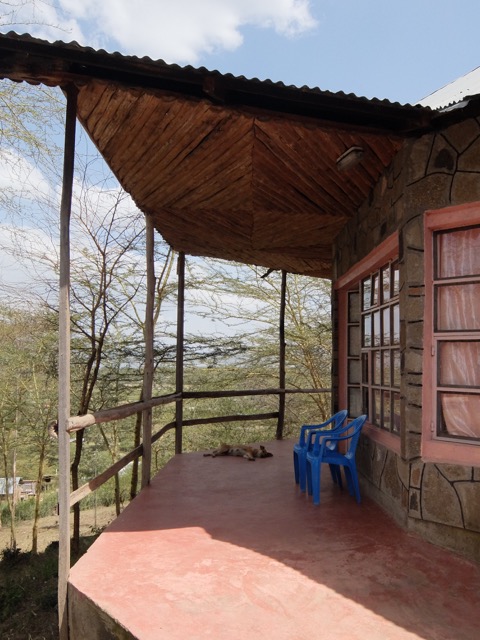
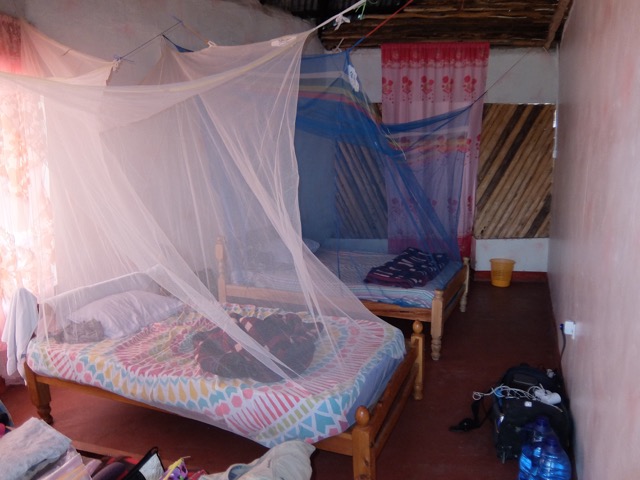
The IV itself was a spacious compound that was very comfortable. Our rooms were brick and mortar affairs with sloping tin roofs, as were many of the buildings, and the beds were very thoughtfully outfitted with bug netting.

DSCF2127

DSCF2128

DSCF2130

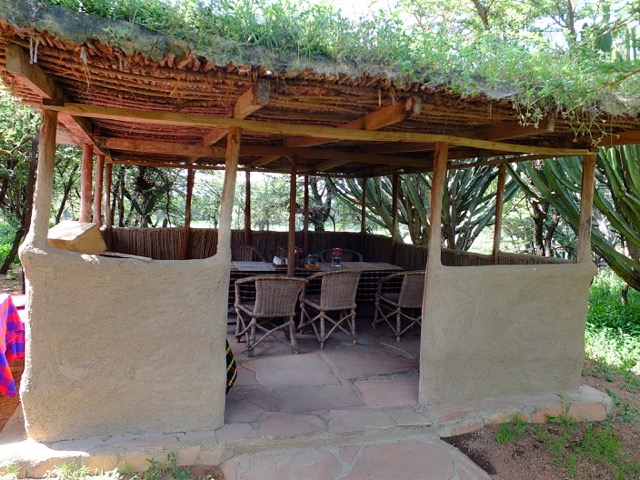
Our dining area, as you can see, was quite airy and spacious as well.

Only two buildings were constructed from wood and mud which was a small house that had been converted into a pub and the kitchen by the dining area where we prepared our meals either by gas hot plate or by open flame in the fire pit. We were to stay here for 11 nights so, thankfully, the accommodation and facilities, though rustic, were more than adequate.

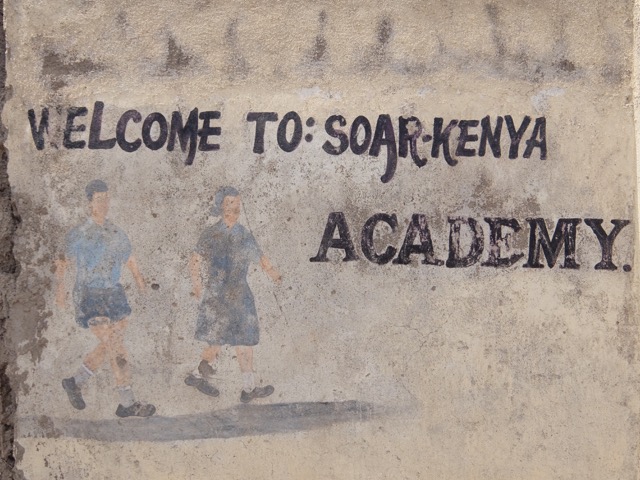
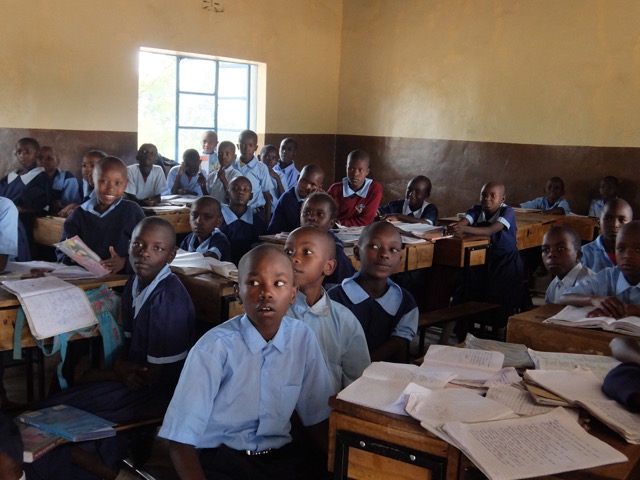
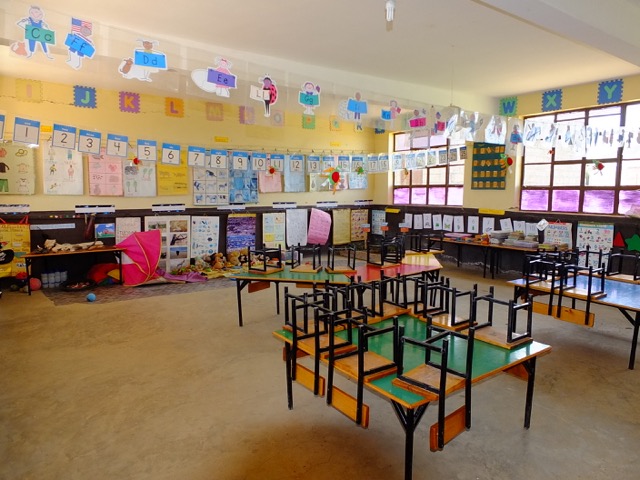
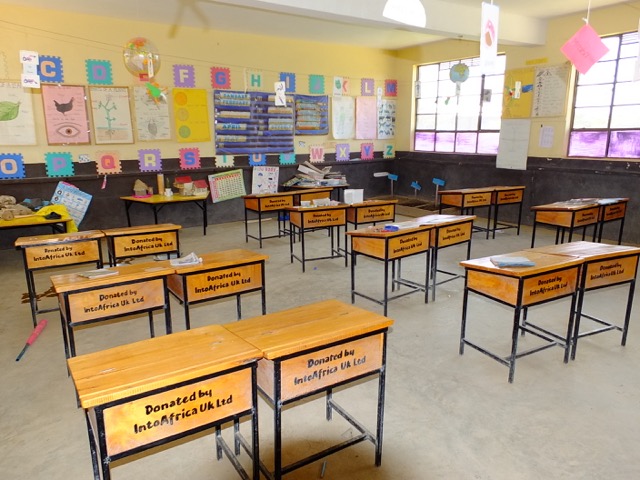
After we got settled we headed to the school where we would be volunteering – Soar Kenya Academy and met James, the founder and director. DSCF2148

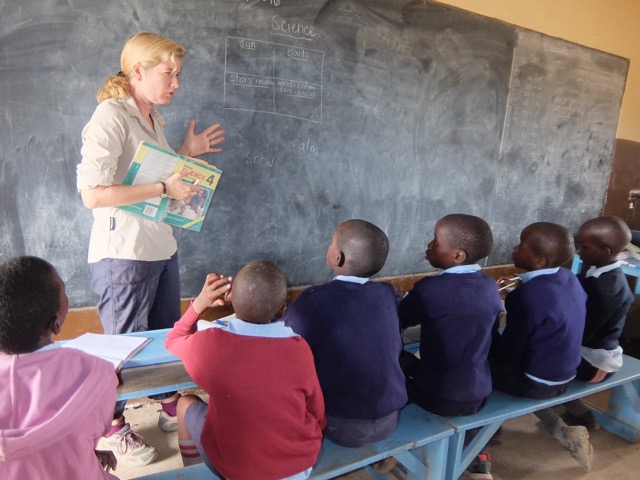
Our intention was to act as teaching assistants to the local teachers but there were more than a few occasions that there were teachers absent and we were just thrown in there. This school ran Pre-K through grade 5 so Barb was more than comfortable to just jump in and teach anything and everything.

DSCF2132

I, on the other hand, was not as versatile. 1) I’m a high-school teacher, i.e., accustomed to working with older students, 2) Music, my specialty, is not a course taught in very many schools in Kenya, and 3) my resemblance to a road construction foreman was probably disconcerting for the students (more on that later). In the end I taught English, Math, and Science to the Grade 5 class.

 DSCF2136

The students were very friendly and we were a bit of a novelty so we were greeted with “Hello, how are you?” about 50 times from each child. What was even more disconcerting was the fact that, because of the different colour of our skin, the children all wanted to touch us. Caleb and Connor found this a little disturbing and encroaching on their personal space but Barb gave them strategies and ideas to avoid uncomfortable situations and to politely decline being touched. It didn’t always work but I think it helped.

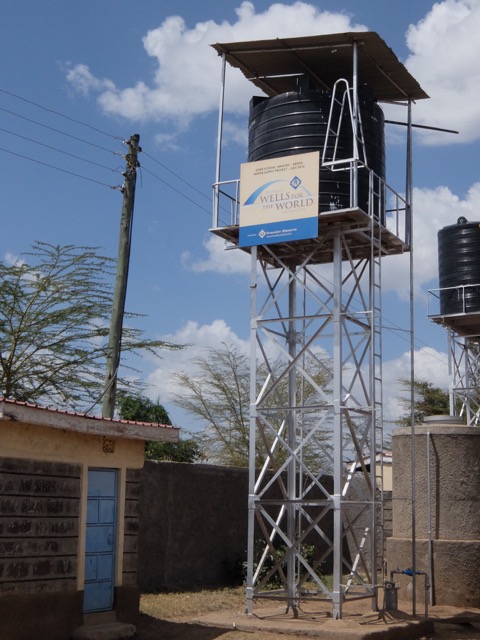
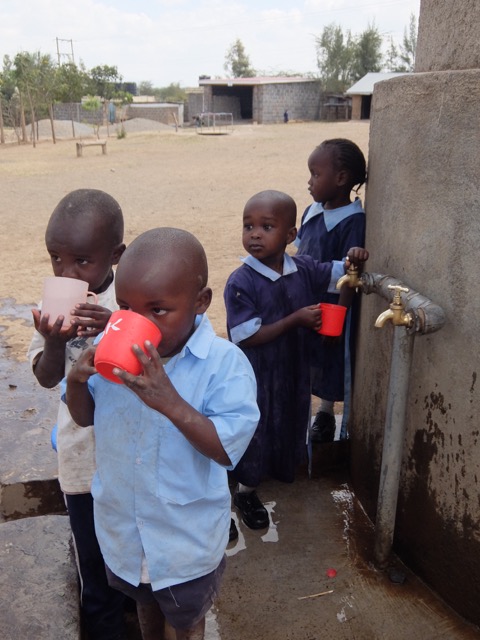
Soar Kenya Academy was founded just 6 or 7 years ago by James Yegon, who had a vision of a safe, affordable place for children to go to school and have enough to eat so they could focus on their education. James has had bore holes drilled for water and helps supply the community beyond the school with fresh, clean water that has been treated to remove excess fluoride (which is known to cause problems with the teeth). Everyone from the surrounding area also brings their cows to drink from the trough of fresh water that comes from the bore holes. Soar is still in the growing stages and James is hard at work to ensure that the needs of the children are being met.

DSCF2147DSCF2153

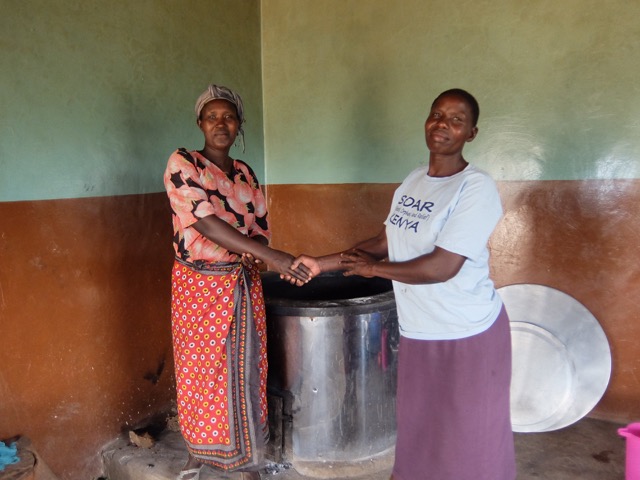
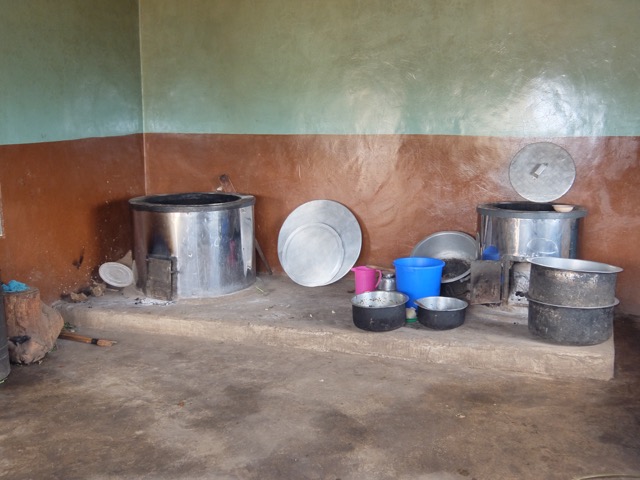
One day I ventured to the kitchen area to return my plate after lunch and met the two lovely ladies who did all the cooking for the 300+ students plus the teaching staff. I was amazed at how they could crank out that volume of food considering the facilities they had. It looked like they had two giant, fire-fuelled rice cookers and a couple of massive pots. Ugali was the staple dish that consisted of a pasty bread-like lump made from maize or millet combined with a boiled kale-like vegetable and is eaten with the hands.

DSCF2155DSCF2157

One evening we were sitting around the IV and James was looking at me and speaking in Kiswahili to Joab, Jata (James Tangus), and Sammy (the night guard).

“You say you’re all from Canada Mr. Clay?”, asked James.

“Yes,” I replied, “we were all born there, why?”

“Because you look like Chinese,” said James. “All the roads in Kenya are built by a Chinese company. They hire the labour locally but send all the foremen from China. You look like a Chinese foreman we know.”

“Don’t be surprised if you get stopped in town many times and are asked for a job,” said Jata and they all laughed.

So, apparently, if teaching doesn’t work out in Kenya I could always go into the road construction business.

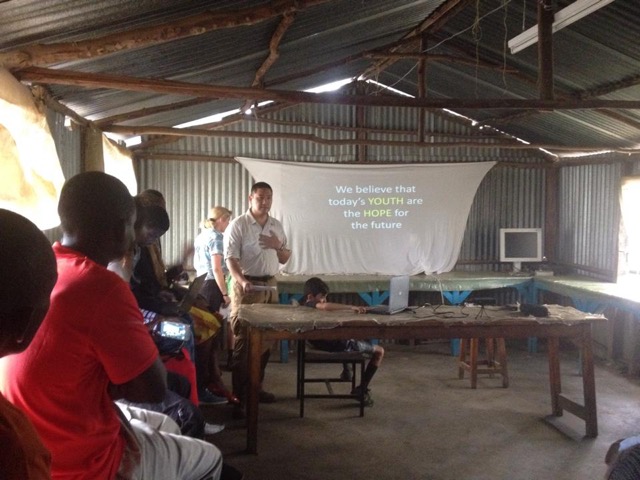
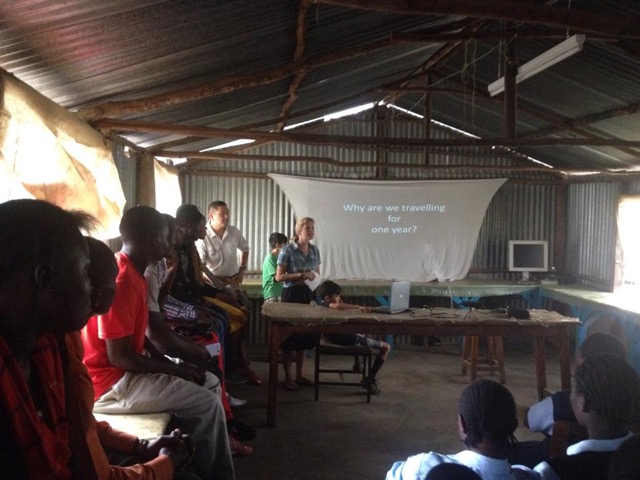
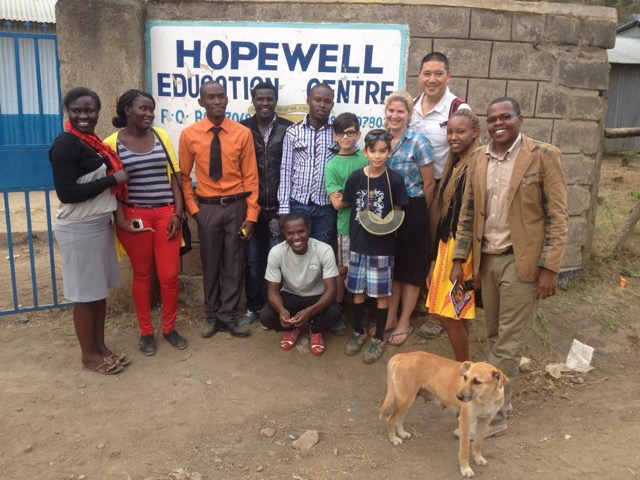
Another evening Joab came to ask if we would be willing to give a 2 hour talk at the local high-school about anything we wanted. I agreed but told him it may not be a whole 2 hours but he assured me that was fine since we could leave time for questions at the end. The talk took place in a Science lab with rough-hewn wooden benches and could hold about 40 people comfortably but they managed to cram in about 120. We managed to borrow a projector to show our PowerPoint and this was the only venue that had electricity.

 Hopewell1Hopewell3Hopewell4

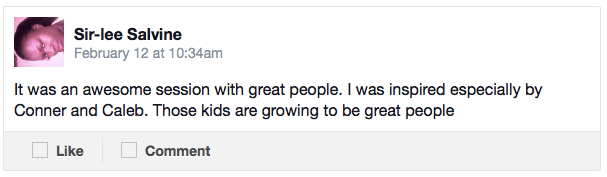
Barb and I wracked our brains and we came up with a motivational talk referencing Spencer West to Malala Yousafzai and Iqbal Masih to Katie Stagliano. We explained the purpose of our travel and the importance of education. Even Caleb and Connor gave a couple minutes talk each to these high-schoolers as part of the presentation about what has impacted them. In the end it was very well received and the facebook comments were very complimentary about the evening. This is probably my favourite comment:

 Screen Shot 2016-02-13 at 1.36.17 PM

This experience has been very good for us to see. It was great for Barb and I to work with students where the vast majority truly value and appreciate the education they are receiving. It was great for the boys to see how different this Kenyan school is from their school in Oakville and how grateful the children are to have something to eat. I think this could be a future partnership with our school, St. Mildred’s.

From here we head back to Nairobi to catch a flight to Tanzania.

Maji Moto, Kenya: A Few Other Details about Living with the Maasai – by Barb

Africa is home to 43 different tribes and 44 different languages. One of the most commonly known of these tribes (but by no means the largest) is the Maasai Mara people.

We had the good fortunate to be able to spend 4 days with some of the Maasai people in the Magi Moto area. Magi means water and Moto means hot or fire. And, yes, there was a hot spring right beside our camp.

DSCF3046

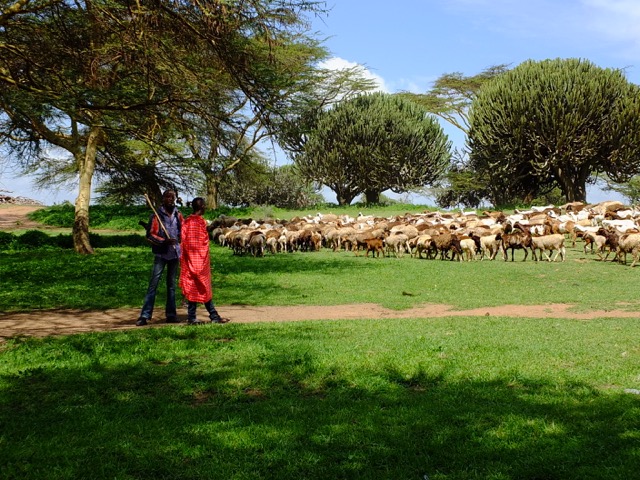
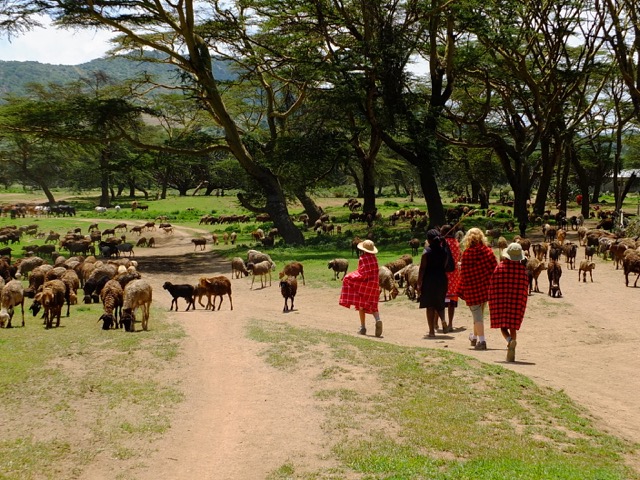
The sheep and goats we encountered on our walk to the spring.

To arrive at the camp we took a local bus from Nairobi to Narok, which took about three hours. We were greeted at the Narok bus station by Salaton, who is the chief of one of the Maasai clans. Salaton spoke excellent English, although he explained to us that he cannot read or write because formal education is not part of the Maasai culture. He learned English when training as a warrior and, as chief, has had the opportunity to practice it because he has been invited on several occasions to speak at different fundraising functions in Kenya and around the world. He enjoys sharing his culture with tourists, and especially with children.

DSCF2891

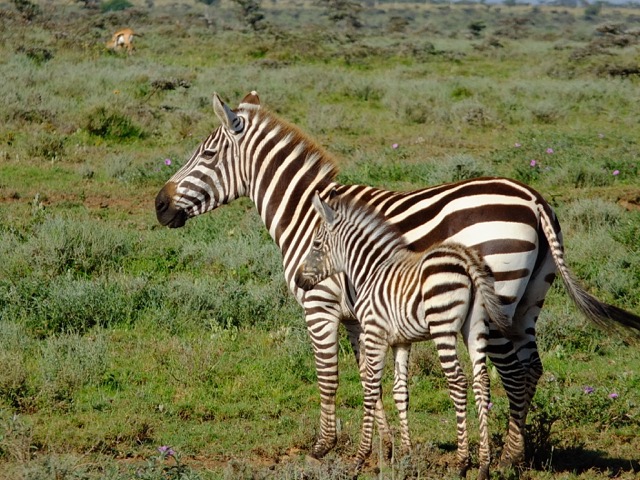
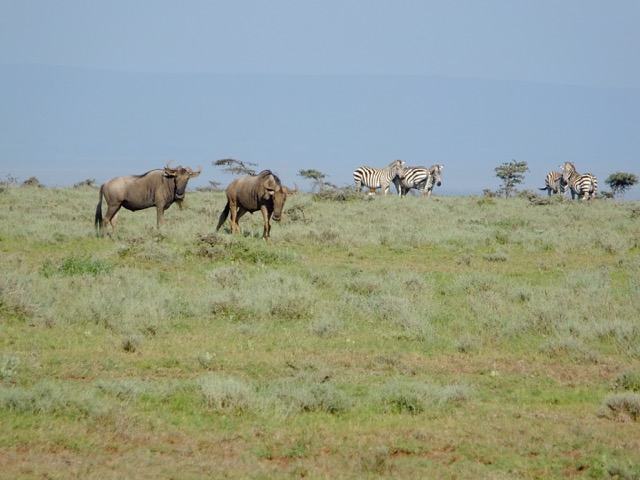
We climbed into Salaton’s very large jeep and headed toward camp. After about 20 minutes the asphalt ended and we bounced along on a rut-filled dirt path. At this point we started spotting various wildlife in the grasslands stretching out from both sides of the vehicle. There were zebras, gazelles, antelope, wildebeests, and even a couple of ostriches, all grazing in the grass and completely oblivious to us traveling through, despite being mere steps away.

DSCF3092

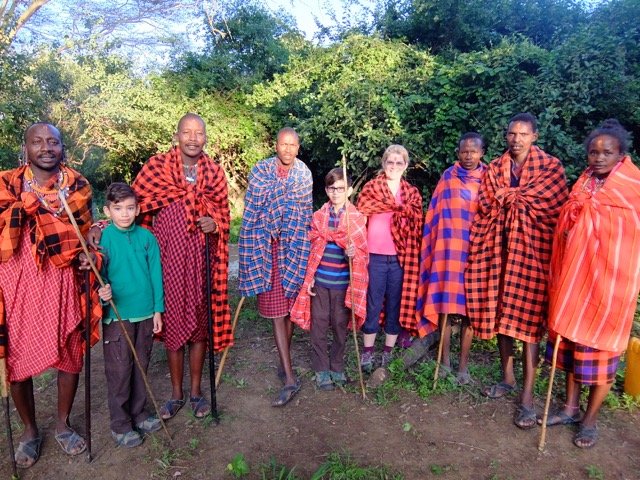
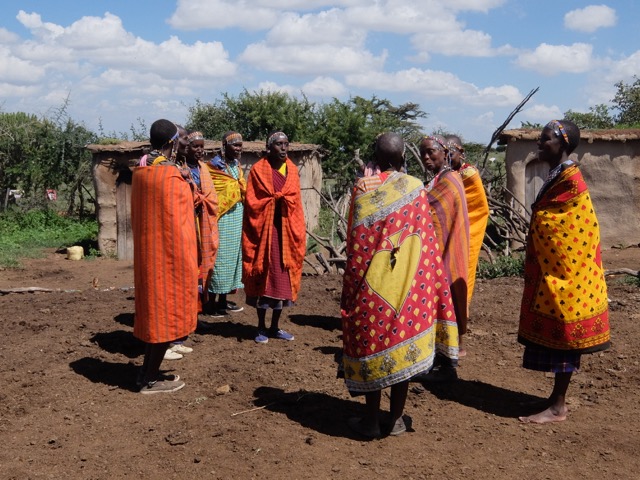
Finally, the jeep pulled to a stop in a treed area and we climbed out. In front of us stood a row of 7 or 8 Maasai people, dressed in their traditional clothing. Salaton informed us that we should shake hands and say “Suppa” (which means hello in the Ma Language). The boys, on the other hand, were to bow their heads, as a sign of respect, and the adults would lay a hand on their heads as they passed.

DSCF2889

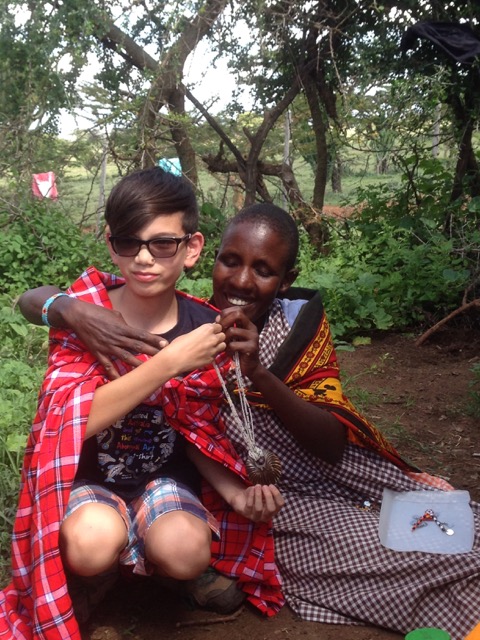
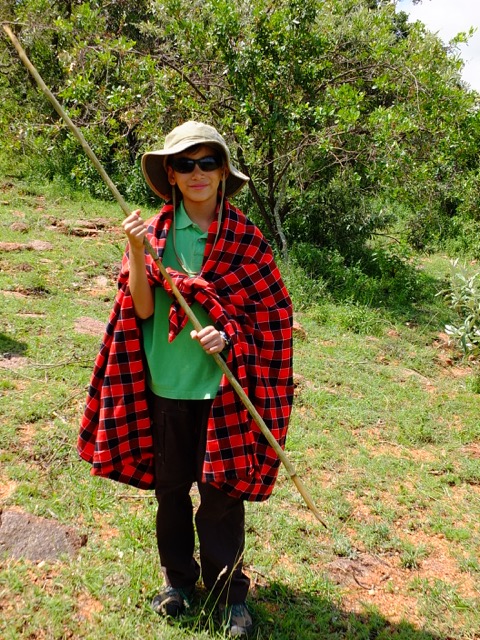
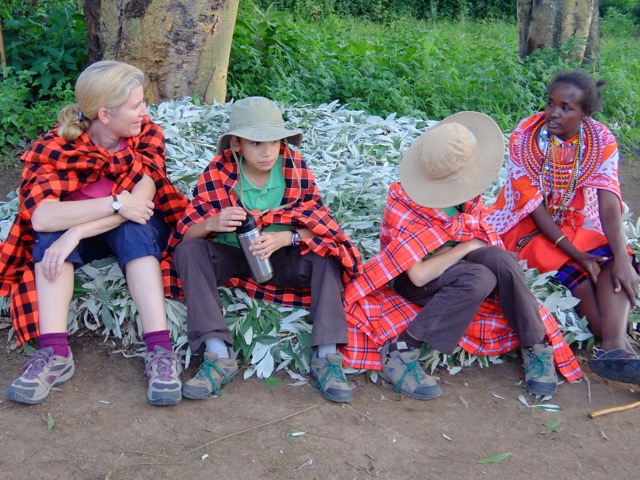
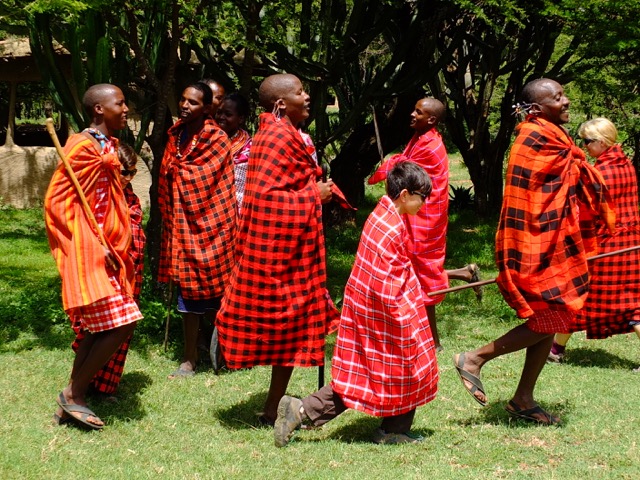
After our greeting, we were each given a Maasai blanket to wear, symbolizing us becoming part of their family. These blankets (known as “ ) are traditionally worn all the time by the Maasai people. We later learned that it was during the time the British occupied Africa that they taught the local people how to weave cloth out of cotton. Prior to this only animal skins were used. When the Maasai people wore the white cloth however, they found the animals were either afraid of them or hurt them. Later, when the Scottish arrived, they showed the people how to dye the cloth various colours and patterns, which is whey the traditional Maasai blankets resemble the Scottish tartan pattern.

The next part of our welcome ceremony was a chant/dance where we were expected to fall into line behind our hosts and do our best to follow along. As part of the dance one of the men would step into the centre of the circle and jump as high as possible. Then he would step back into the circle and another man would take a turn. One of the men signalled Caleb and he took his turn jumping in the centre, followed by Connor, and then Clay. Fortunately for me, the jumping component was not something the women partake in! The men perform the jumping ritual to impress the women. Apparently the man that jumps the highest, gets the woman!

Mary, one of the Maasai women who greeted us, showed us around the camp. We would be staying in the mud huts that had been created for visitors. The camp apparently was created 8 years ago, when some visitors came to learn about the Maasai people and had the idea of assisting them (both physically and financially) with the building of a school. I was curious as to whether or not the people would be worried that giving the Maasai children an education would undermine their culture, but Salaton explained to me that because 85% of the Maasai people are uneducated they can easily be taken advantage of. Sometimes people try to make deals with the Maasai to get their land, and since the Maasai don’t know their numbers they are unable to determine if the deals are fair. Also, some of the cultural practices such as female circumcision are known to be harmful and unhealthy but without education it is difficult to convince the Maasai people of this.

DSCF3055

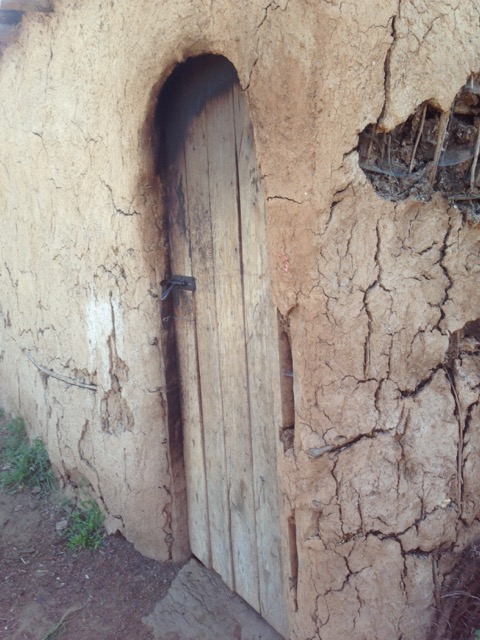
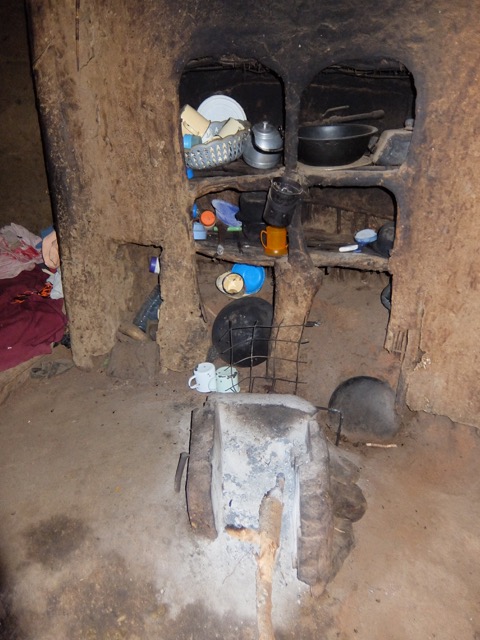
So, some people from Poland donated money and came to build a school. The Maasai people thought they could perhaps have them stay in their homes while they were there, but Maasai homes are very, very small. They sleep on stick mats in one corner and the goats sleep in another. A fire is started in the middle of the room and there are no windows – just a small hole cut out of the top for the smoke to escape. The walls and shelves are a combination of cow dung, mud, and ash. (The ash helps to keep away the termites.)

IMG_1012

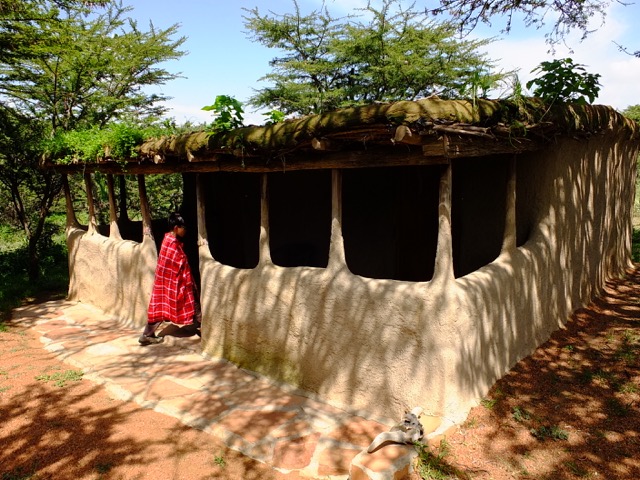
The result is a very dark, fly infested, smoke-filled home – not something that the visitors would find very comfortable. So, it was decided to build some mud huts. They were quite pleasant, with a small screened window, wooden platforms with mattresses on them and a simple shelf for our clothes, made from sticks and poles.

 IMG_0951

There is no electricity in the area but at night they would come and place a battery in our huts and the toilets to power small LED lights. Also, they would light candles and place them in paper bags weighted down with sand, and line a path from our hut to the outhouse.

DSCF2965

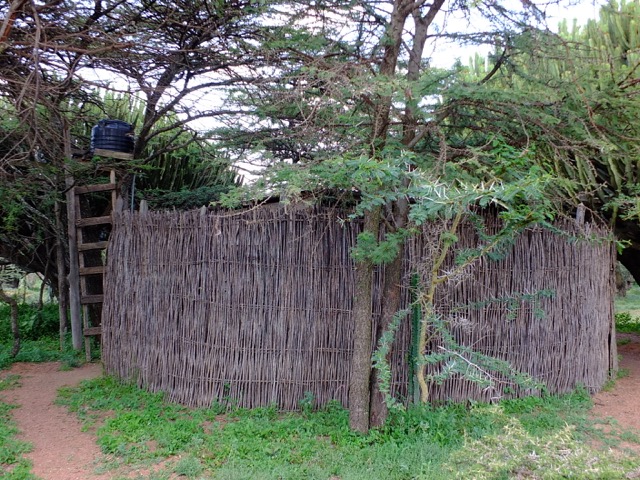
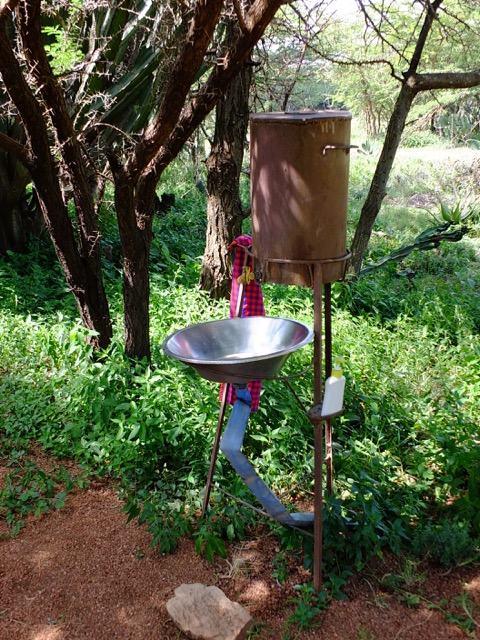
The bathroom was a simple outhouse, but water was carried from the hot spring each morning and used to fill a jug so that we could wash our hands. Also, the warm water was placed in a large reservoir up on a platform and a hose ran from it into a small shower enclosure so we could have a warm shower. If you wanted a shower at another time you needed to give the some advanced notice so that the tank could be filled.

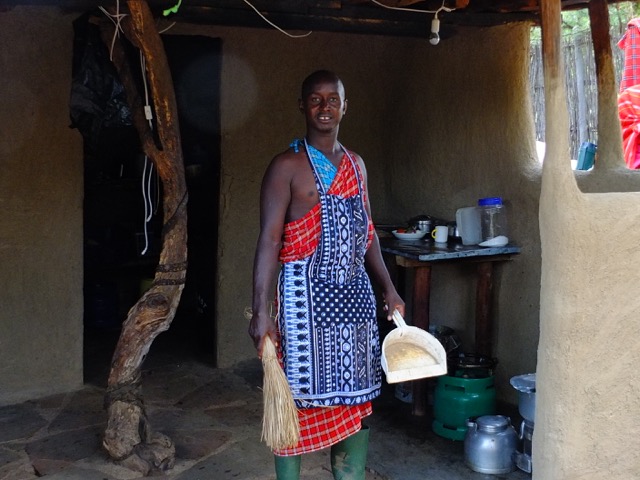
A cute little dining hut and a food preparation area completed the camp buildings. Salaton employed a chef when there were visitors and he and his helpers did an excellent job of preparing delicious meals.

 DSCF2906

Caleb and Connor have done an excellent job of explaining what we did while at the camp so I won’t go into further detail about that here but I just wanted to share how much we valued this experience. Caleb said to me, after our night in the bush, “This is something I will never forget, even if I get Alzheimer’s!” and I think we all feel the same. The Maasai culture is so different from our own, one cannot help but be intrigued. It is amazing to think that there are people who still live this way in 2016. Although we were only able to stay for a four short days, this was an experience we will treasure for a lifetime.

Maji Moto, Kenya: Warrior Camp, Part 3 – by Caleb

Days 3 & 4

I woke up at two in the morning, to the sound of rustling in the bush right beside me. One of the warriors is on his feet with a spear in hand. I try not to look and eventually go back to sleep.

The next time I wake up, it is a more reasonable time (7 a.m.) and the sun is up. Over a cup of hot chocolate I ask whether the rustling I heard was real or a dream. It was real! In fact, it was hyenas! I almost spew my hot chocolate all over the place when I hear that! At two in the morning there was a pack of hyenas only a couple of meters from my head. The warriors explain how the hyenas and jackals smell the goat and try to sneak in to get some but they claim they will not come too close once they see the warriors there. I’m still thankful to be alive!

DSCF2103

 Anyway, we finish our drinks, pack up, and begin our trek back to camp.

DSCF3082

An hour later we make it back and breakfast is waiting for us. Pretty much every breakfast we had at the camp was eggs, fried tomato, crepes, and toast. It was tasty.

Connor and I continue to practice our spear throwing and become semi-professionals thanks to all the practice we have that day.

IMG_0980

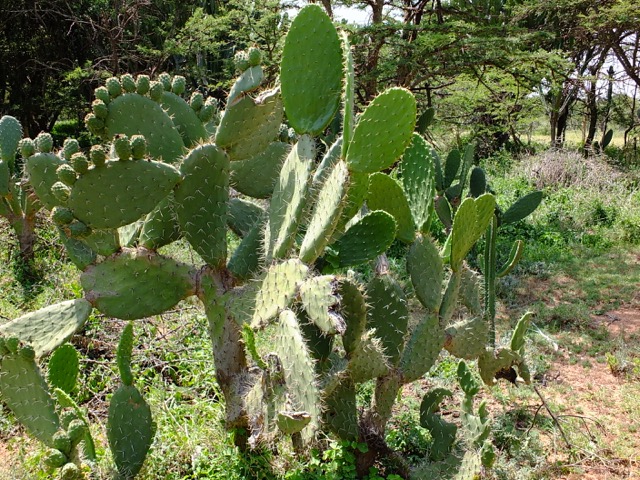
Despite the fact that cactuses grow back from injury at an exceptional rate, I don’t think the cactus that was our target would be able to grow back. We did quite a number on it! My arm still aches because of all the throwing! Totally worth it though. If our trip continues along these lines, I might make a decent security guard when I return home.

In between spear throwing, we go to see the school that I wrote about earlier. It is about a ½ hour walk from the camp.

DSCF3059

Kindergarten

DSCF3061

Grade 5 Classroom

DSCF3062

The girls’ dormitory

DSCF3063

The kitchen at the school.

We meet the director of the school who gives us a tour, including the girls’ dormitory – which is really basic but adequate. We also purchase a couple of t-shirts with the school name on them, to help support the school.

After lunch we then head over to meet the widows at the “widows’ village”. I also wrote about that earlier. I purchased a necklace from one of the widows while we were there.

IMG_1014

Well it was nice to see the village I was quite happy to head back to our hut because of the flies.

The next day, when we had to leave the Maasai camp I was sad to say good bye. The people were so kind and really made us feel a part of their community. It would be wonderful to continue to support them once we return home and that will help to bring back great memories of this place.

Maji Moto, Kenya: More About Our Goat Experience – by Connor


About a week into our stay in Kenya we went to a warrior camp in Maji Moto that was supposed to educate us about how the people of the Maasai Tribe live and stay alive in the bush.

We stayed there for three nights and on the second night we stayed on out in the bush. The first thing I’d like to say about our night in the forest is……. “Gross”! We didn’t only stay in the forest, we actually had to slaughter a live goat and eat it. It wasn’t instant to get there – first we had to walk for just over an hour.

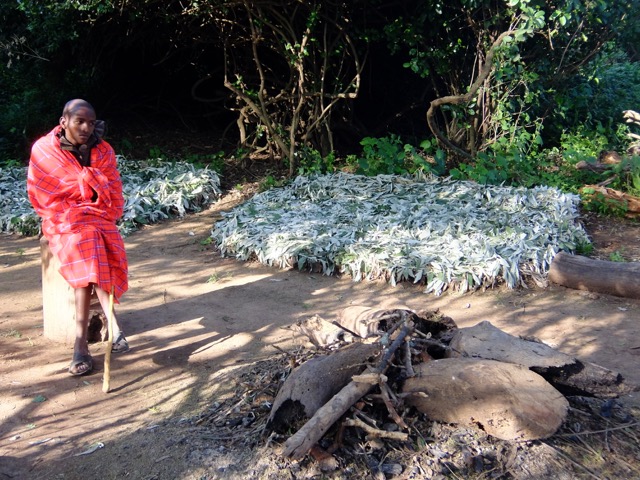
When we arrived we saw our beds, which were leaves stacked on top of each other, but it was better than just lying on the hard ground! There were about six beds set up in a semi circle and in the middle was the fire pit.

IMG_0985

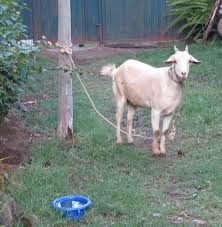
The poor goat was off to one side, tied to a tree. He was going to be our dinner.

IMG_0982

When they were ready to kill it, they carried it to a bed of leaves – but not the beds we were going to sleep on – one of the beds off to the side and a bit higher than the others. They lay the goat on the leaves and instead of slitting it’s throat they suffocated it by grabbing the mouth and nose and putting them together so the goat could not gasp for air. The reason they suffocated it was because if you slit its throat it can take a long time to die and it makes a lot of noise.

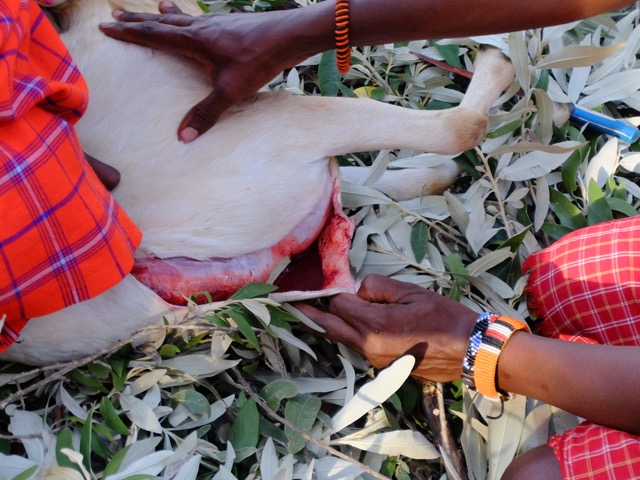
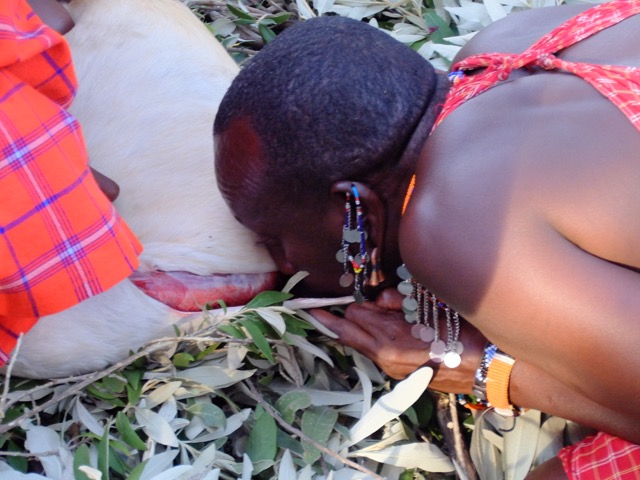
When the goat was dead, they opened the neck with a knife and blood spilled out of it onto the skin they had made into a trough underneath it.

DSCF2093

The warriors drank the blood but we chose not to.

DSCF2092

After that they took off the skin and then opened the body. First they took out the kidneys and ate them fresh. They asked us if we would like to eat a kidney, but again we chose not to. Then they took out the stomach (which was green because the goat had just been eating) and they emptied the contents of the stomach onto the grass. Next they wrapped the other organs in the goat’s skin to dry them off a little.

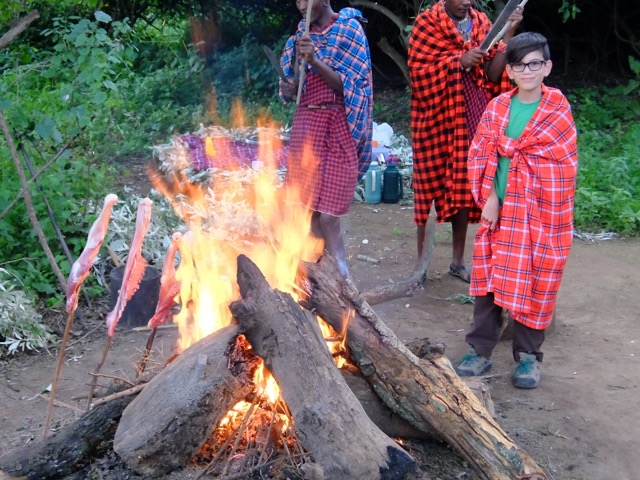
While the organs were drying they cut out the ribs and stuck them on sticks. The fires was already started so they jabbed the sticks in the ground beside the fire to let the ribs roast.

DSCF2095

They continued to cut up the goat until everything was cooking on the fire. They even took the head and burned it over the fire and then put it in a steel bucket of water to boil.

DSCF2098

Later, when everything was cooked, they passed around the meat. I tried not to think about slaughtering the goat while I was eating it. It was pretty tasty if you didn’t think about where it had come from.

This was a great experience and I would want to do it again. But, if your kids are young this might not be for them. It might be hard for them to see what happens to the goat.

Maji Moto, Kenya: Warrior Camp, Part 2 – by Caleb

Day 2

Waking up to the sound of bugs flying around my ear isn’t exactly a wake up alarm I enjoy. (I don’t really like any other wake up alarms either, but this one I hated a lot!). The smell of breakfast did make me want to stay in a good mood though because it smelled delicious. As we found out at breakfast, one of the warriors had been sitting outside our door all night, keeping an eye out and a spear close at hand. With hyenas, lions, and other wildlife roaming, well, wild, we were thankful to be protected all night by someone with a spear.

After breakfast, and few reminders that we would be going “pulli-pulli”, we set out on yet another trek up the hill and back down to camp. On this trek, however, it was quite interesting because we learned all about nature’s magic, culture, and many other cool things that I never knew.

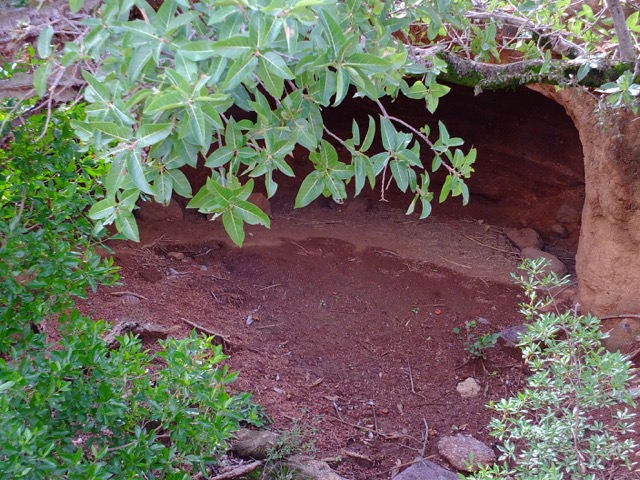
On the way up the hill, Mary pointed out a small cave in a ditch. She explained that in order to see if a warrior is actually ready to be a warrior, you must live in that cave and survive for 2-6 months. Every boy (no girls) was shipped off to this cave at the age of fourteen whether he wanted to or not. If you survive, then you have succeeded in the final test before becoming a warrior. If you failed the test, well, you get the picture!

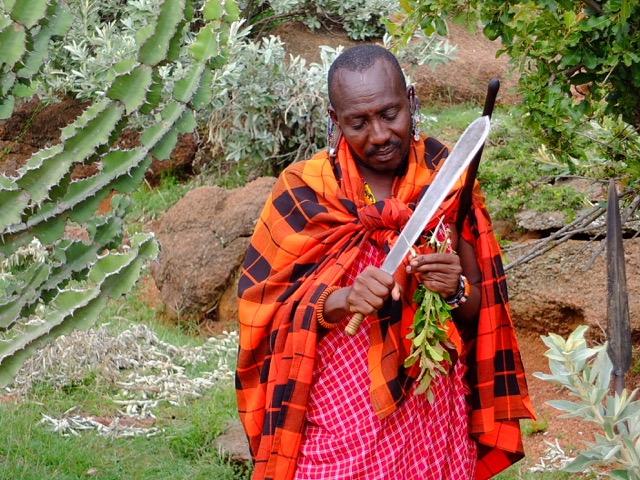
DSCF2979As we continued to walk up the hill, Qweyla spotted a flower in the middle of nowhere. He pulled it up and beneath it was a big white root. He explained that this was a wild carrot and it was safe to eat. He proved that to us by letting us take a bite out of it. It did taste like carrot. A few more meters up, Qweyla stopped us, hacked a branch off a bush, skinned it, chopped it into pieces, and handed it to us. He told us to chew the ends of the stick until it was soft and then rub it all over our teeth. Apparently, this was nature’s toothbrush. By the end of the rubbing, we were quite surprised with the results. My teeth felt smooth and very clean. Too bad we didn’t keep some!

DSCF2975

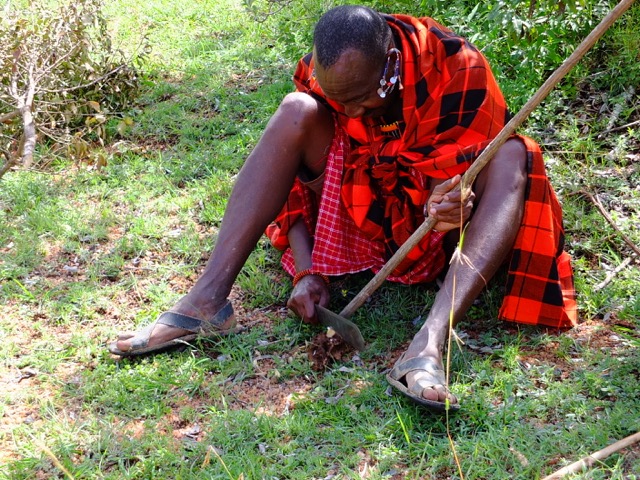
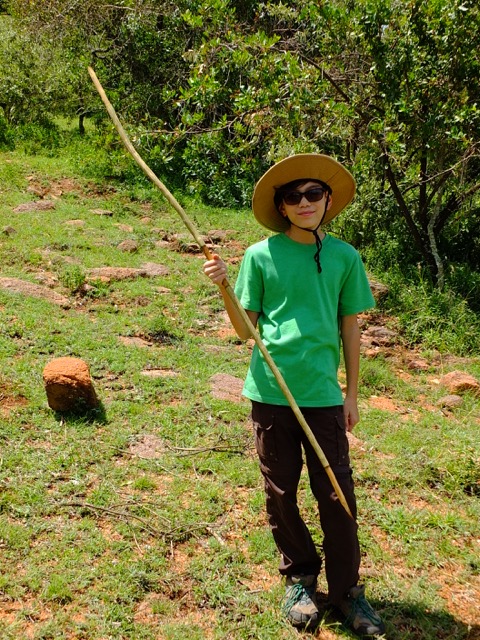
Once we got near the top of the hill, Qweyla found a couple of long, straight branches and carved Connor and I a spear.

DSCF3001

He spent quite a long time taking the bark off the sticks, carving the ends to a sharp point, and marking the centre of the stick where you hold it – ensuring the balance was just right.

DSCF3012 DSCF3036

We also sat in a crocodile’s mouth (not really, just a stone formation that looked like a crocodile mouth!) and then we headed back to camp where we were greeted with lunch.

IMG_0973


DSCF2990

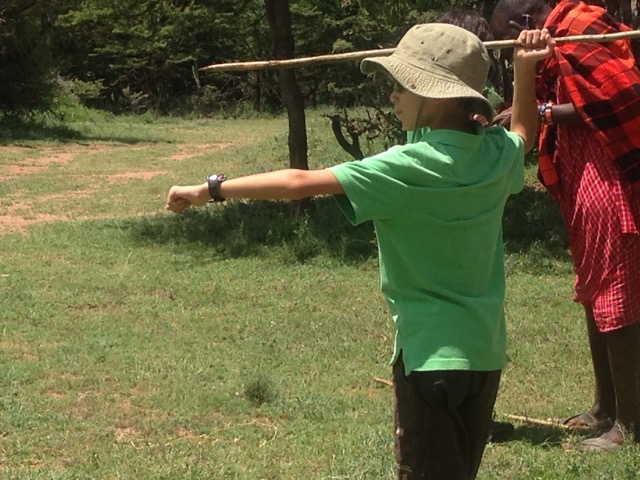
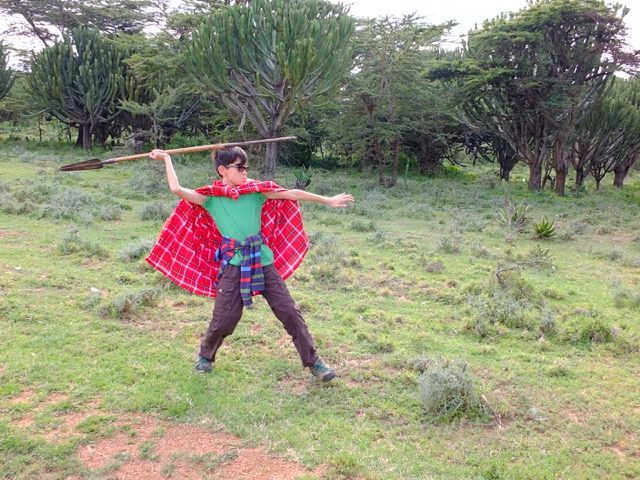
After filling our stomachs, Connor and I practised spear throwing for several hours.

DSCF2912

Qweyla showed us how to throw our spears at a poor unsuspecting cactus and we practised over and over until we became more accurate with our throws.

DSCF2895

We also had a short rest, because later, we had to go into the woods and survive there for the night.

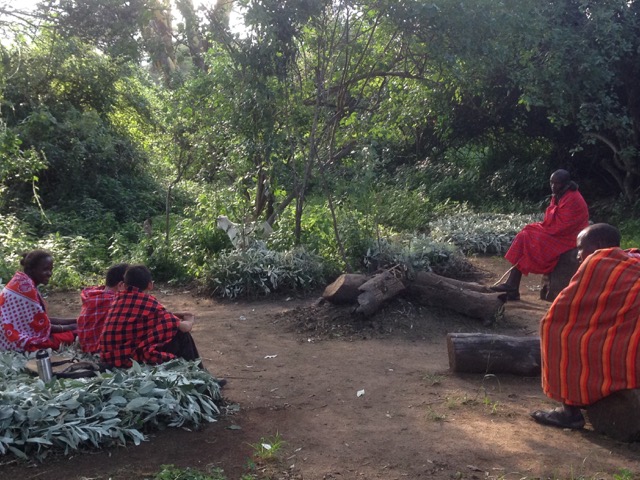
We set off a while later and began our trek into the wilderness. It was an hour before we arrived at the special place the tribe uses for their ceremonies and celebrations. A couple of warriors were waiting for us there. They had set up a very basic camp with a fire pit in the middle and five beds around the fire.

DSCF2087

The beds were made completely with leaves. The leaves were just piled layer upon layer upon layer, which was a good thing, because it provided more cushioning.

DSCF2084

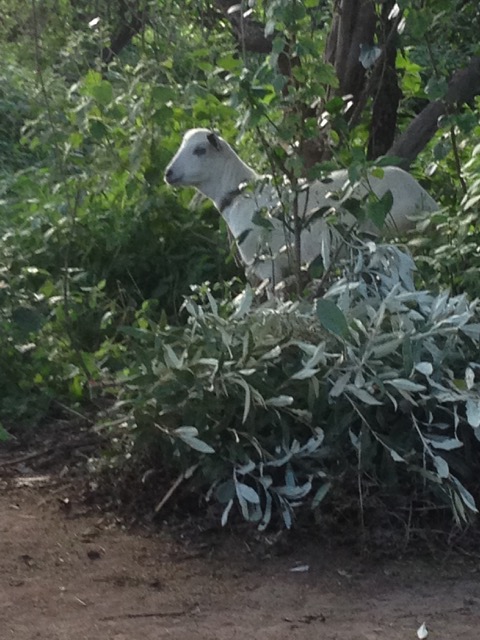
A goat was tied to a small tree right beside the beds. Little did he know that he was to be our dinner. Yep, we were going to have to slaughter it.

goat

 We got ourselves settled (as settled as you can be in the wilderness) and had a brief look at the area. We were completely surrounded by trees and bush. And yes, in case you were wondering, our bathroom was a purely natural one as well (aka behind a bush).

On one of the beds they had placed drinks and we could help ourselves to tea, coffee, and hot chocolate. Everyone sat around the fire pit talking for a bit while I helped myself to hot chocolate. Connor was explaining to my mom that he was tired and a bit anxious about having to slaughter a goat. Of course it didn’t help his nervousness when a big, black spider crawled out of one of the beds, coincidentally, the bed he would soon be sleeping on. Despite the fact that he was tired, he really wanted to stay up as long as possible to avoid an insect infestation in his clothes.

After a few more minutes of chatting, Salaton explained how the goat is eaten. He said that they believe they must eat the entire goat and none of it is to be wasted or else the spirit of the goat will not live a good second life (or something along those lines). One of the warriors began to get a fire going while another untied the goat and brought it over to a pile of leaves beside us. Mary explained that they don’t cut off the goat’s head or “kill it” but rather they put it to sleep. She said that they suffocate the goat so it won’t make any noise and it just goes into a deep sleep.

They got the fire going just as the sun began to set. Qweyla and a couple other warriors held the goat down. Qweyla kept the jaw locked together so the goat could not breath, by taking one hand and locking the jaw shut. At the same time, the palm of his hand pressed down on the nostrils, sealing them closed so there was no way the goat could inhale or exhale. It took a couple of minutes but the goat eventually died.

Salaton then explained the stages they follow to eat the goat. First, the warriors drink the blood. Secondly, they eat the kidneys raw. Thirdly, they burn, roast, and eat the hooves. Fourthly, the ribs are skewered and cooked over the fire and then all of the other bits are roasted. Finally, the head is burned and then boiled. The only thing not eaten are the bones, and even they are split open so you can eat the marrow and then they are used as tools.

The fire got massive because we needed to cook the goat. We were practically laying trees on the fire, we got it so big.

DSCF2101

We cooked the goat and gradually devoured it. That was dinner and it was actually pretty good. We then danced around the fire doing some sort of tribal ceremonial dance. Again, it was quite confusing for me, because I don’t know the language. All we said (or what we were told to say) was “angai”.

We stayed up a little longer and then a jeep arrived. They explained that they bring sleeping bags for us because they have learned that visitors are often not comfortable just lying on top of the leaves. They also brought a tent, in case it poured rained we could stay in there until the worst of the rain passed.

We lay down on the “bed” and tried to get some sleep. I was paranoid. After seeing more than one spider crawling out of this pile of leaves, I was scared to death! Even so, I eventually got so tired that I fell asleep under the stars.

Maji Moto, Kenya: Warrior Camp, Part 1 – by Caleb

Arrival Day!

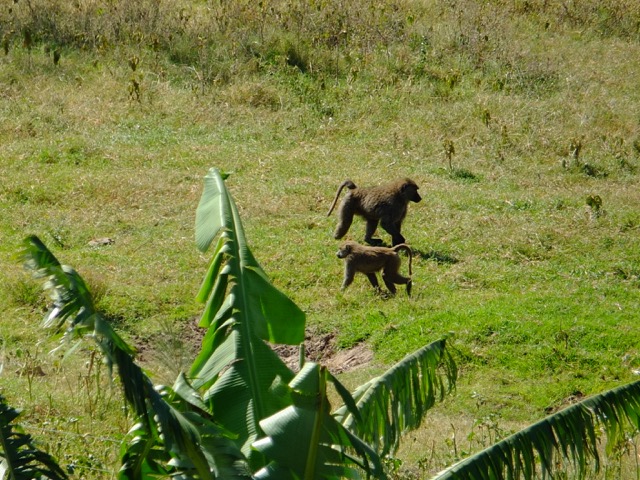
I….hate…..road trips. Those four words are the four words I have used consecutively the most on this trip. Of course, the bus ride from Nairobi was three hours and then to get to the actual camp was another forty-five minutes. The forty-five minutes did fly by though, because we were practically on safari! We saw ostriches, gazelles, wildebeests, baboons, and zebras.
DSCF3104

DSCF3107


DSCF3151 DSCF3171

Upon arriving at the Maasai camp they dressed us in traditional “blankets” and asked us to join in a welcome dance. I’m sure if I spoke the language the dance would have been more interesting, but for me, it seemed all we were doing was dancing in circles, and shouting a lot!

DSCF2887 DSCF2889

Any-who, after the dance we got a brief tour of the area. We were the only visitors there so the place was pretty quiet. All the buildings are made from sticks which were covered in mud. There were three huts for the guests to stay in: two single ones, and a large double one.
DSCF2899 DSCF2900

We were staying in the double one, if you haven’t already guessed. There were two rooms, each with three single beds in them.
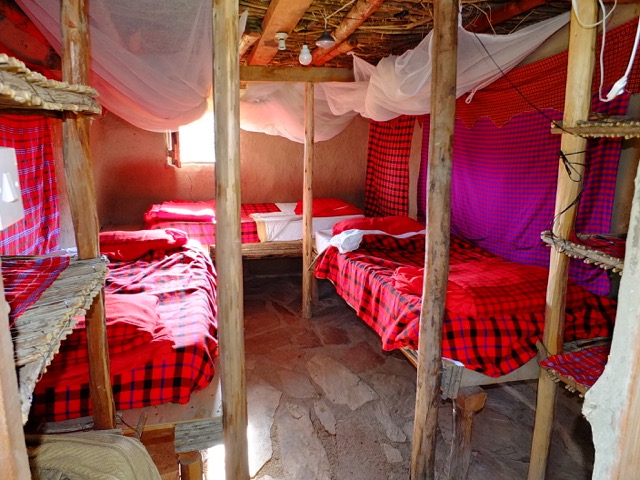
DSCF3085The rooms were connected by a small walkway right outside the entrance. There was no electricity, just a small battery powered light hanging from the ceiling. The only other source of light was the window, opposite from the entrance.

The bathroom was the only building not made from sticks and mud. It was a small, concrete building with a stick roof. One side for guys, the other for girls. The toilets were pretty much wooden crates with a lid – over a pit (which of course, doesn’t flush and isn’t exactly pleasant.) The shower was the exact same size as the bathroom, which was one metre wide by a metre and a half long. The water was hot though, because there was a natural hot spring close by. The water came out of a tiny tube and you stood on a wooden grate while you showered, so you were not standing in the water that had already been used.

DSCF2908

Despite all the differences from back in Canada, we tried to make ourselves at home. We got ourselves settled into our mud-houses and had lunch. We had a cook named Albert and he made us a delicious lunch that consisted of pasta, banana stew, shredded cabbage, and a salad.
DSCF3042

Also at the dinner table was hot water and African tea. After that delicious lunch, we went “pulli-pulli”. “Pulli-pulli” is Swahili for slow or relaxed. My mom and dad had a nap and I just lay there thinking about nothing in particular.

Now, the people who work here will say that the schedule is very flexible and quite “pull-pulli” but don’t expect it to be slow going – there is a lot to do that has been crammed into the 3 ½ days. Thus, after our nap, they were eager to get a move on. The conversation sort of went like this….(By the way, one of the Maasai working here was named Qweyla. He is one of the warriors.)

Qweyla: Good afternoon. Did you rest well?

My Dad: Yes, it was very comfortable.

Qweyla: Feeling strong?

My Dad: Stronger than before!

Qweyla: Let’s go!

So, as you can see, the schedule can be stretched a bit, but after you rest, you’ve got to get a move on! Thankfully, they took it easy on us and we did a hike that was a fair distance but not too bad. Qweyla grabbed his spear, because we are in the wild and there is always the chance of being attacked by a lion. Mary, another one of the Maasai working at the camp, came along with us.
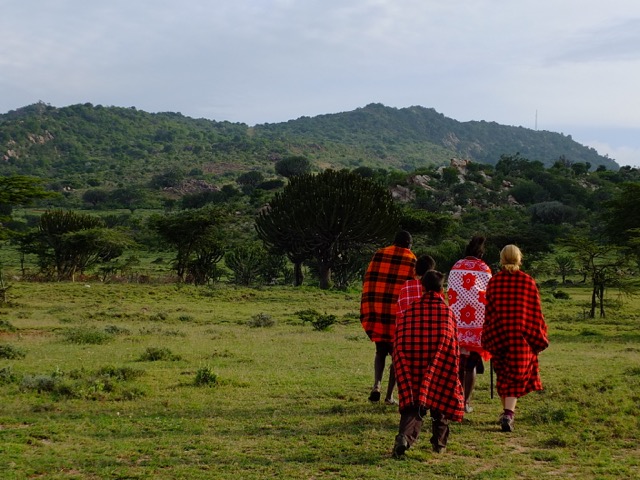
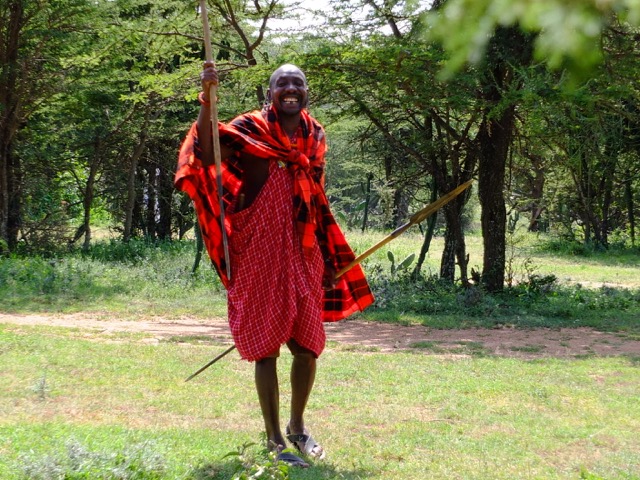
DSCF2921DSCF2902

Now, I’m going to explain a little about the history of the camp because Mary isn’t just another worker there. You see, the chief of the tribe, named Salaton, wanted to help some of the Maasai girls and widows. Maasai men can have as many wives as they like at one time but for the woman, once the husband dies, or if he leaves them, they cannot remarry. This is a problem because in many arranged marriages (where the parents pick who the daughter will marry – which is the Maasai custom) the girl might marry at fifteen and her husband could be seventy years old. Thus, when the husband dies she will be left widowed and has to live alone, unable to own anything, and is essentially powerless for the rest of her life. The reality is that she becomes shunned by the community. So, Salaton built a village for the widows to stay in, just a few meters away from the camp.

DSCF2105

In this “widows village” the women are given some goats to look after. They also make jewellery out of beads and sell it to visitors who come to the camp.
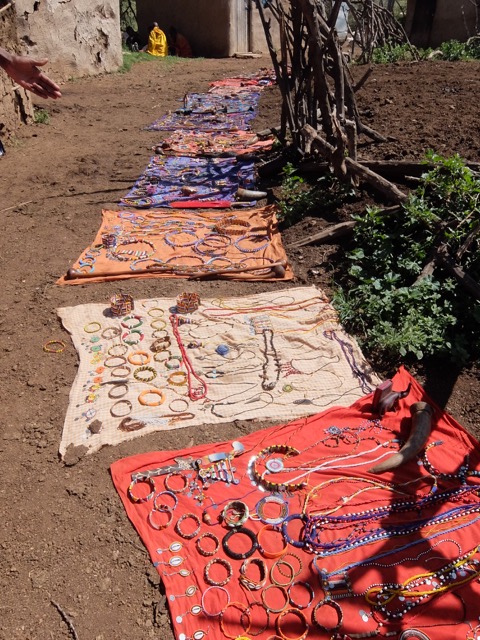
DSCF2115

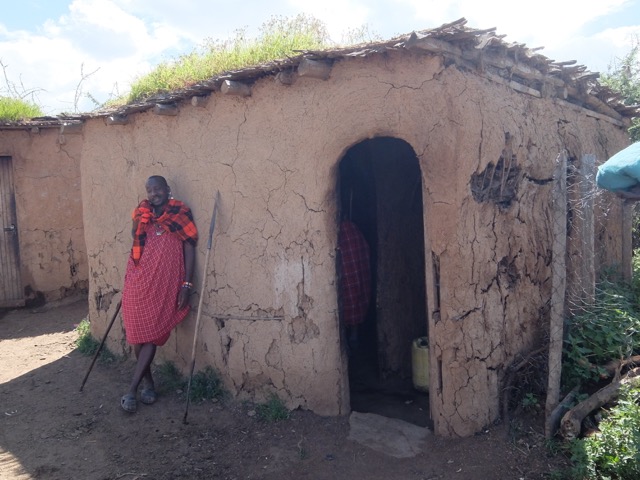
We visited the widows village on our last day at the camp. I was really surprised by their homes, which are very small, dark and completely infested with flies.
DSCF2109

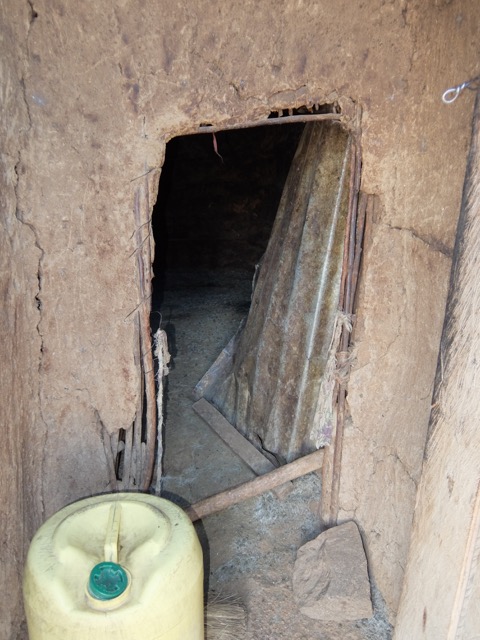
There are no windows in the homes, which are built from mud and sticks. There is a small fire pit in the centre and a hole near the roof, for the smoke to escape.

DSCF2114

Mary told us that if you leave the door open a little when you are cooking, it helps the smoke to go out the hole, but obviously a lot of it fills the home. We could barely see anything when in the house because it was so dark but we could certainly feel the millions of flies landing on us. There are so many flies because they also keep goats and sheep in the house at night. They have a little room for them in the corner.
DSCF2110

The homes are built in a circle and in the centre of the circle of homes is an area for the cows to stay at night to protect them from the wildlife. This also contributes to the flies in the area because over time the cow dung piles up higher and higher in the centre. Connor went tromping around on it, not realizing that it was a pile of poo! Apparently the widows’ homes are the same as all of the other Maasai homes. I am so glad I have a nice house in Canada! Mary also explained how the children and animals are shared by everyone. She said that the children can sleep in anyone’s home and can eat there as well. So, if Sally doesn’t want to eat what her mom is cooking she goes and stays at another home that night!

The camp, or the little area with the huts that we stayed in, is a place where tourists can come and stay. They had originally thought that the visitors could stay with the Maasai people in their homes but they quickly learned that foreigners found that just a little bit too rustic! The fees visitors pay for the camp (which are massive) help support the Maasai workers, the widows, as well as the school that Salaton started.

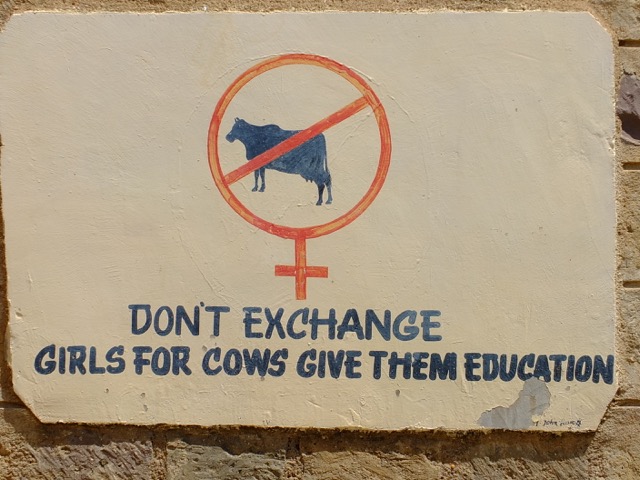
In addition to helping the Maasai widows, Salaton also wanted to help save girls from female circumcision (female genital mutilation). FGM is a common practice with the Maasai people. It is believed the girls need to be circumcised just before the onset of puberty and this causes many problems in their lives. Many women that have been circumcised suffer from complications in childbirth and some even die. Salaton’s goal was to rescue young women before they were circumcised so they could live a better life and they could be employed by the camp or be sponsored to go to school. Salaton also rescued girls who were going to be married off too early, or others whose families wanted to trade them for cows (which is very, very common in the Maasai tribe).
DSCF3056

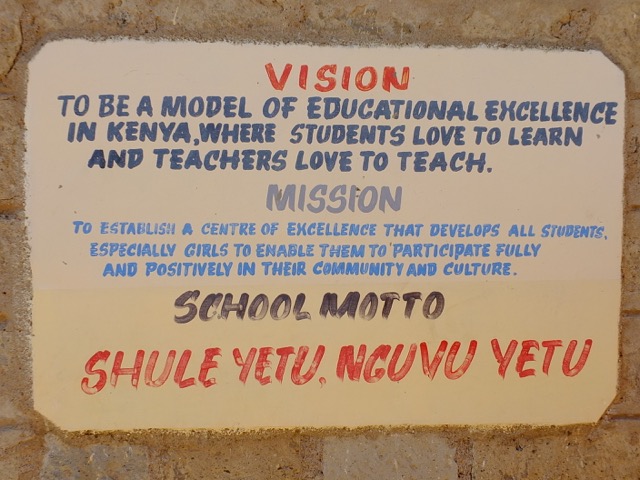
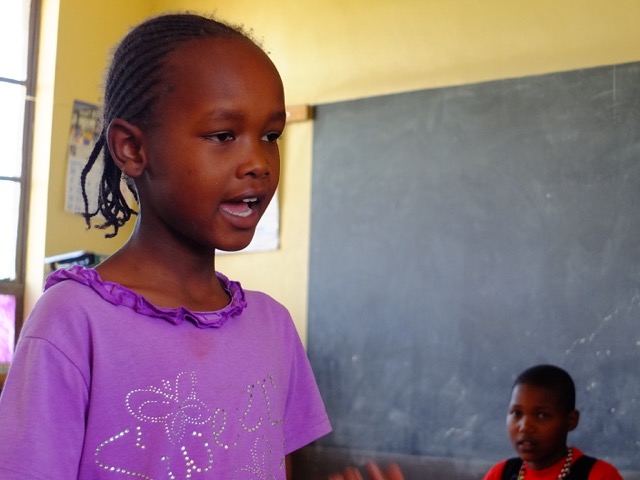
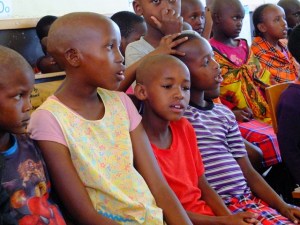
He started a school for the rescued girls so that they could receive an education. We went to visit the school on our final day at the camp. The students performed songs, dances and poems for us.
DSCF3069 DSCF3075

They seemed very happy to be at school. The girls who are rescued board at the school because they cannot return to their families. There are also some needy boys who attend the school as well.

IMG_1002

Mary, who works at the camp, is one of the girls Salaton saved her from circumcision.

DSCF2938

He found a sponsor so she could attend primary and secondary school and she now works at the camp, giving back to her community. She wishes to go to college and study community development, but in order to do so she will need anther sponsor. So, as you can see, just by going to this camp, were helping multiple people and employing others in need.

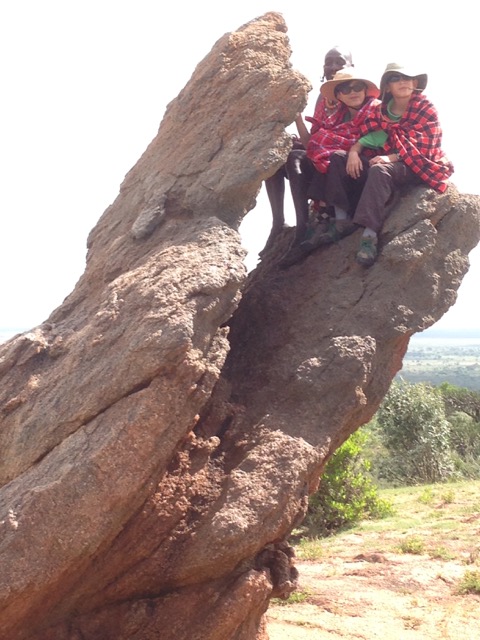
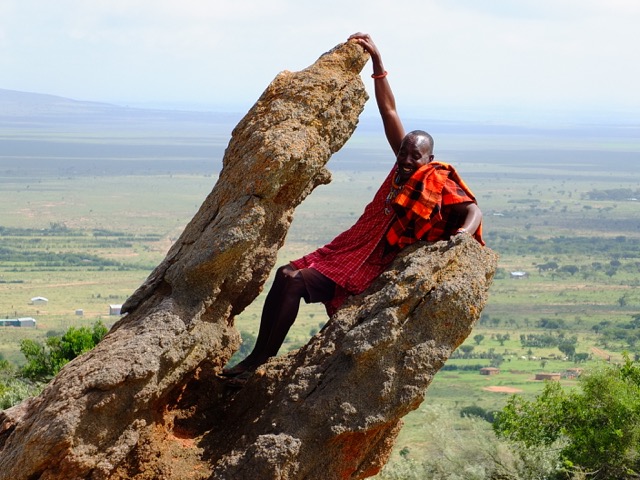
Anyway, back to the walk. Mary and Qweyla led us through the valley and up a hill to a big rock. Once we climbed up the rock we had an amazing view of the prairie, the hills, and the wildlife.
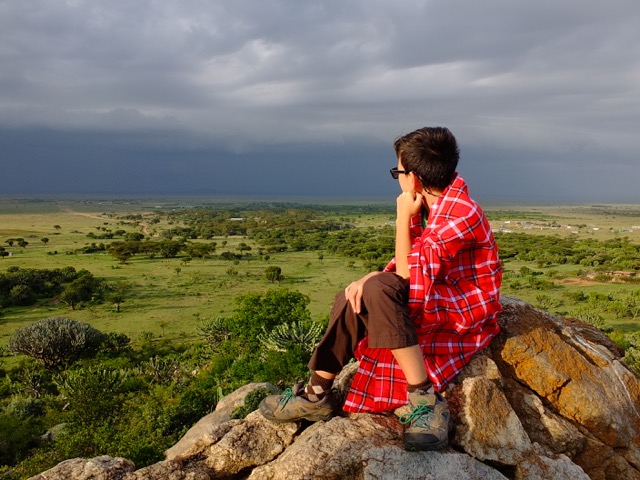
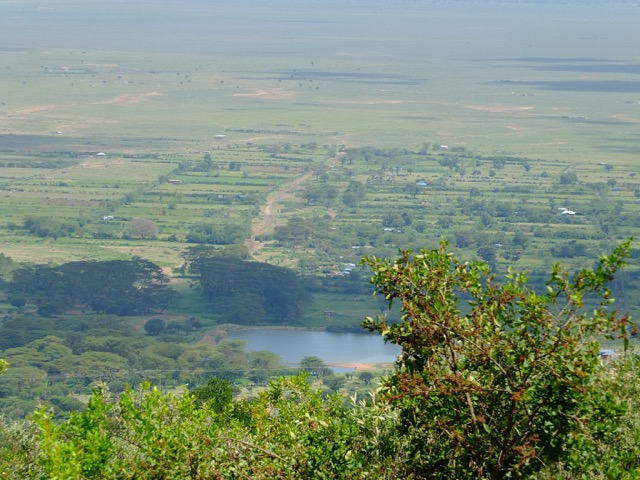
DSCF2939

DSCF3004

We stayed up there for ten minutes or so, then made our way down the other side back to camp. When we arrived back at the camp, dinner was ready and waiting for us. Qweyla just said, “See, very pulli-pulli!” Dinner was a traditional Kenyan meal consisting of a potato and bean stew, an avacado and tomato salad, and delicious creamy coleslaw. As we found with all of our dishes, Albert never disappoints when it comes to food.

After dinner we were taught one of the most, if not the most, important thing to do to survive – make a fire. That might sound easy to you but I’m talking about making a fire using only nature. And I’m not talking about rubbing sticks together for hours; no, I’m talking about making a fire in a matter of minutes, if not seconds. Everything used in this process comes directly from nature’s extensive selection of materials. The only thing you need that’s not directly from nature is a sharp knife, and even that can be crafted from nature’s supplies. Here is the step-by-step process we followed:

Step 1: Go into the forest and find a log and a stick that is very straight and roughly a centimetre thick. If possible, the thinner stick would be best if it was red cedar. If red cedar isn’t found where you live, try to find straight sticks that aren’t still living. Unless you can find fresh red cedar, made sure whatever other material you use is already dead. (If possible, the best material for the log is also red cedar.)

Step 2: With the knife, peel off the bark and the green layer from the stick so you leave a ‘barkless’ stick that is now ¾ of a centimetre thick. With the log, carve a small wooden plank that is about one inch wide, four inches long, and half an inch thick.

Step 3: Using the tip of the knife, place the knife on the plank and spin it to drill a small hole near the edge of the plank. This hole should be just as wide as the width of the stick and about two millimetres deep in the centre of the hole. On the same side as the hole, cut a groove into the side of the plank right beside the hole. This groove should be just deep enough to reach the hole so if you look through the groove you should see the inside of the hole.

IMG_0959

Step 4: Place the end of the stick into the hole made in the plank. It should fit perfectly. If not, you need to adjust the size until it does.

Step 5: You know that gesture you make when your hands are cold and you rub them together quickly to create heat? Well, that is about to come in handy, cause what you do is put your palms together with the stick in the middle, and then make that gesture.
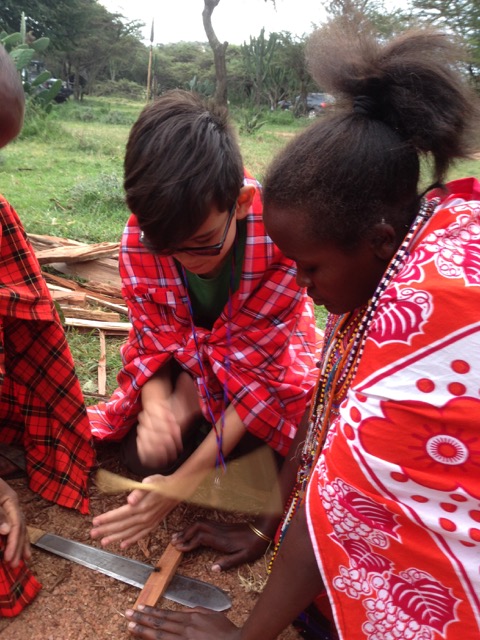
IMG_0967

This should result in the stick spinning back and forth, thus creating friction between the stick and the plank. This technique works on the same principle as rubbing sticks, except this is a whole lot faster and more efficient. Eventually, the friction caused between the two pieces of wood will cause heat. Soon that heat will be so hot that it actually burns the plank.

IMG_0963

Step 6: When you start to see smoke do not stop spinning because you must continue until the burnt parts of the plank get shredded and fall down the groove you created. Keep going because eventually a small pile of smoking, burnt, shredded wood will appear at the base of the groove. Soon enough a spark will come flying out and that is when you can stop spinning the stick.
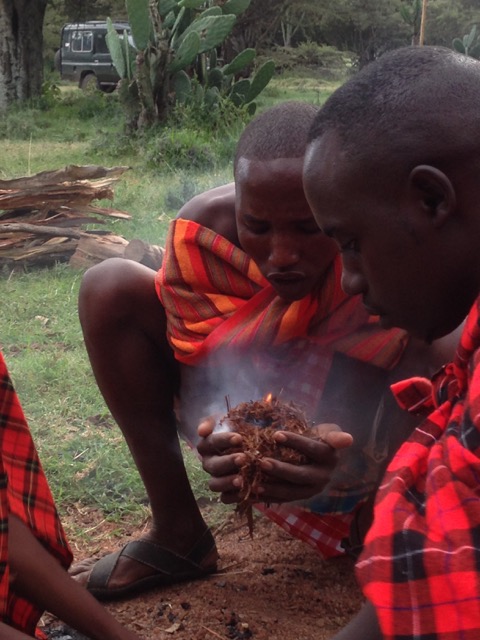
IMG_0964

Step 7: The spark will land on the burnt pile of wood and then you need to transfer the whole pile of shredded wood onto a sort of birds nest. This nest is very small (maybe three inches wide) and made from dry twigs, bark, and shredded wood. You gently blow on the spark so it turns into a flame and lights the nest on fire.
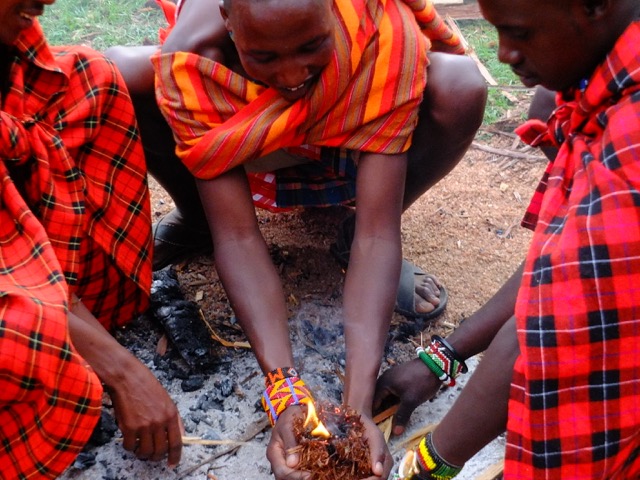
DSCF2955Step 8: Finally, place the nest under a tepee layout or in a log cabin layout and continue blowing until the cabin or tepee sets fire and I’m sure most of you know what to do from there. We got a rip roarin’ fire going. We asked if they roasted marshmallows at fires. The obvious answer was no and Mary said that they roast meat over the fire instead of sugar puff balls. Yep, most people here don’t even know what a barbecue is! I was actually impressed by that because cooking your food this way is much better for the environment than our gas guzzling propane powered cooking machines, aka barbecues.

After the fire we got ready for bed, which was quite an adventure on its own. There are two sinks that we could use, one under a tree which had what looked like toothpicks sticking out of it, and one under an enormous cactus tree.

DSCF2907

We took the one under the cactus tree because the cactus looked cool and was less spikey than mr. prickley-pine over there. So, here we are brushing our teeth, staring up at the cactus, admiring its complexity.

DSCF2894

Little did we know that this particular cactus species is highly poisonous. If you puncture its skin it will release a white, milky substance. If this liquid gets on your skin it can cause serious rash and pain. Even worse, if it gets in your eyes you go blind permanently. Its’ raining while we’re brushing our teeth so the rain is dripping off the cactus tree. Oh dear! Maybe this wasn’t so bright! We learned that we should always learn about everything before touching it.

We all returned to our cabins thankful to still have our vision and got into bed. Hallelujah, there were bug nets over the beds. As we found however, they don’t do much good if all the bugs that annoy you just fit through the tiny holes in the net. It did keep the spiders away though so I felt the bug net was totally worth it. We got to sleep OK and we made it through day 1 safe and sound.